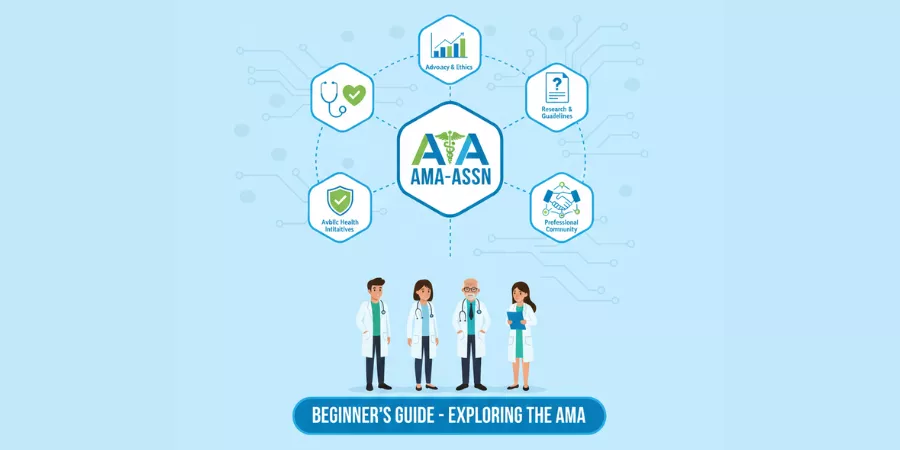
The ama-assn org (American Medical Association), widely known as the AMA, sits at the center of organized medicine in the United States. When people talk about physician standards, medical ethics, policy advocacy, and clinical publishing, the AMA is usually somewhere in the background shaping the direction. Its work influences how doctors are trained, how care is delivered, and how health policy evolves.
This guide walks you through what the AMA is, why it was created, what it actually does, and how its presence continues to shape modern health care.
What is American Medical Association?
The ama-assn org (American Medical Association) is the largest professional organization representing physicians and medical students in the United States. It was established in 1847, at a time when medical education and practice varied wildly from place to place. There were few shared standards, limited oversight, and inconsistent training.
A group of forward looking physicians decided that medicine needed structure, accountability, and shared ethics. The ama-assn org (American Medical Association) was their answer.
The association now includes doctors from various specialties and researchers and residents and students. The organization functions as a professional association which serves as the national representative organization for doctors. The organization uses a democratic system to make policy decisions through its House of Delegates which allows medical society representatives to vote on various positions and priorities.
The Core Mission Behind the AMA-ASSN Org
The ama-assn org (American Medical Association) mission centers on three ideas: advancing the science of medicine, improving patient care, and strengthening public health. That mission is not decorative language. It guides funding decisions, advocacy efforts, education programs, and publishing priorities.
In practical terms, the AMA aims to:
- Improve how medicine is practiced
- Support physicians in their daily work
- Protect patient interests
- Push for evidence based health policy
- Maintain ethical standards across the profession
The association also invests heavily in physician well being, recognizing that burned out doctors cannot deliver strong patient care. That shift toward physician mental health has become more visible in recent years.
Why the AMA-ASSN Org Was Needed in the First Place
In the mid 19th century, anyone could claim to be a doctor. Training programs were inconsistent. Some medical schools offered short lecture cycles with little clinical exposure. Quality control barely existed.
The ama-assn org (American Medical Association) stepped in to raise the bar.
It pushed for standardized medical education, longer training periods, and science based curricula. It evaluated medical schools and published findings that pressured weak institutions to improve or close. That reform movement changed the quality of American medical training within a few decades.
Another major contribution was the creation of a national code of medical ethics. That framework gave physicians a shared professional compass and helped build patient trust.
The AMA and Medical Publishing
One of the AMA’s most powerful tools is publishing. It produces the Journal of the American Medical Association, known globally as JAMA. This journal is among the most cited and respected medical publications in the world.
JAMA and its specialty journals publish:
- Clinical research
- Public health studies
- Treatment guidelines
- Policy analysis
- Medical reviews
For many physicians, these journals are a primary source of trusted, peer reviewed knowledge. The ripple effect is large. Research published here often shapes treatment protocols and public health discussions.
Policy Advocacy and Government Influence
The ama-assn org (American Medical Association) plays a major role in health policy advocacy. It maintains an active presence in Washington and across state governments. Lawmakers often look to AMA policy positions when evaluating proposed health legislation.
Its advocacy work includes:
- Medicare and Medicaid policy
- Physician payment systems
- Telehealth regulation
- Public health funding
- Insurance reform
- Scope of practice debates
The ama-assn org (American Medical Association) does not always get its way, but it rarely goes unheard. Its policy teams analyze legislation, propose amendments, and mobilize physician voices around key issues.
Support for Physicians in Real Practice
Many people assume the ama-assn org (American Medical Association) is only about politics and publishing. That is only part of the picture. A large share of its work focuses on practical support for physicians.
The AMA provides tools and guidance on:
- Practice management
- Billing and coding systems
- Electronic health records
- Care delivery models
- Quality improvement methods
It also runs continuing medical education programs so doctors can keep their knowledge current. Medicine changes fast. Structured learning support helps physicians keep pace.
Ethics, Standards, and Professional Conduct
Ethics in medicine is not optional. The ama-assn org (American Medical Association) maintains and updates a detailed Code of Medical Ethics that addresses real world dilemmas doctors face. Topics include patient consent, confidentiality, end of life care, conflicts of interest, and emerging technologies.
Hospitals, courts, and medical boards often reference these ethical opinions. They serve as a professional guidebook when situations get complex.
This ethical framework is one reason the ama-assn org (American Medical Association) continues to hold authority beyond its membership size.
Public Health and Community Impact
The ama-assn org (American Medical Association) also works beyond clinic walls. It supports public health campaigns and prevention efforts. Over the years it has backed vaccination drives, anti smoking campaigns, injury prevention measures, and chronic disease awareness.
More recently, it has expanded focus on:
- Health equity
- Social drivers of health
- Access gaps in underserved communities
- Data driven prevention strategies
These initiatives recognize that health outcomes depend on more than prescriptions and procedures.
Criticism and Course Correction
It is fair to say the ama-assn org (American Medical Association) has faced criticism. Some argue it historically resisted certain reforms or protected physician interests too strongly. Others point to periods where its positions did not age well.
What matters is that the organization has shown a pattern of revision and course correction. Policy positions are debated internally. Votes happen. Language changes. Priorities shift. That internal debate is part of how it evolves.
Educational Resources and Professional Development
The medical education resources which are offered by ama-assn org run in the full career continuum. Medical students find data regarding residency programs, board certification and career planning in the early stages. Ama-assn org beginner guide feature allows new users to familiarize themselves with the website and locate the appropriate resources to their career level.
Ongoing medical education programs ensure competency and licensure of the physicians. American Medical Association provides accredited programs in medical disciplines, such as new treatment methods as well as in management of practices. These resources of physicians are able to meet the state licensing requirements and widen professional knowledge.
The leadership development courses equip physicians with the administrative and advocacy roles. There are webinars, workshops and online courses on the development of leadership skills on the ama-assn official platform. Such programs develop the future of healthcare leaders who will lead medical practice and policy.
Specialized Resources and Tools
The ama-assn org provides specialized tools that address specific physician needs. Practice management resources include templates, calculators, and strategic planning guides. These practical tools help physicians optimize their operations and improve patient satisfaction while maintaining financial viability.
Clinical guidelines cover hundreds of medical conditions and procedures, offering standardized approaches to diagnosis and treatment. These evidence-based recommendations reduce practice variation and improve patient outcomes. Physicians can search by condition, specialty, or clinical scenario to find applicable guidelines.
Patient education materials help physicians communicate effectively with patients. The ama assn website offers downloadable handouts, visual aids, and multilingual resources that improve health literacy. These materials complement physician consultations and support informed patient decision-making.
Why the AMA Plays a Critical Role in Today’s Healthcare System?
Health care is more complex now than at any other time. Technology, regulation, cost pressure, and patient expectations all collide. In that environment, a national physician body still serves a purpose.
The ama-assn org (American Medical Association) remains a central platform where medical standards, physician concerns, research insight, and policy direction meet. Its reach spans education, ethics, publishing, and advocacy.
For physicians, it offers structure and representation. For patients, its influence shapes safer standards and stronger accountability. For the health system, it provides continuity and professional leadership.
That combination explains why the ama-assn org (American Medical Association) continues to hold weight after more than a century and a half of change.