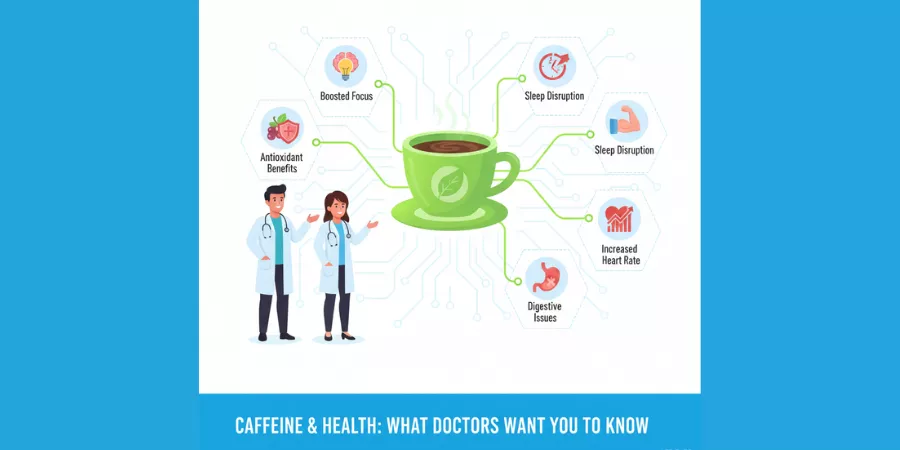
Doctors see the results of everyday choices. Many patients drink coffee, tea, sodas, or energy drinks without thinking about the long term. The truth is simple and useful: caffeine can help, and it can harm.
This article explains what doctors want patients to know about caffeine and translates the science into practical steps you can use now. It covers the caffeine impact on health, the effects of caffeine on the body, common caffeine side effects, and clear guidance on how much caffeine is safe for most people. The goal is to give trustworthy, human advice you can act on.
How Caffeine Works, in plain words?
Caffeine acts like a wake up call for your brain. It blocks receptors for a chemical called adenosine, which normally makes you feel sleepy. That blockade increases alertness and can boost mood and focus for short periods. The same action also triggers the release of adrenaline and stimulates the heart and digestive system.
All of this explains both benefit and risk: the same mechanism that improves focus can also create jitteriness, faster heart rate, and trouble sleeping. Understanding the caffeine impact on health starts with knowing these basic actions.
Short Term Benefits and Why People Rely on Caffeine
Millions rely on caffeine for energy, mental clarity, and to reduce fatigue. For many, moderate use supports productivity and performance during long days. Athletes sometimes use caffeine to increase endurance and strength for brief windows.
Those positive effects come from the same neurochemical shifts that cause alertness. When consumed in reasonable amounts, the effects of caffeine on the body are largely beneficial for alertness and short-term performance. Harvard, Mayo Clinic, and other reviews emphasize that low to moderate doses can have good effects when used sensibly.
What Doctors Worry About: Sleep and Mental Health
Sleep is the most commonly harmed area. Studies show caffeine delays when people fall asleep, reduces total sleep time, and lowers deep sleep. The timing matters. Even caffeine taken six hours before bedtime can reduce sleep quality and duration.
For someone who already struggles with rest, caffeine can feed a loop: poor sleep increases daytime caffeine use, which worsens sleep the next night. That cycle is a major component of the overall caffeine impact on health. If your nights are poor, reducing late caffeine often helps more than adding a sleep aid.
Caffeine and Anxiety
Caffeine can raise nervousness, palpitations, and feelings of panic in some people. Recent meta-analyses link higher caffeine intake with greater risk of anxiety symptoms, especially above certain thresholds.
If you experience sudden racing heart, sweaty palms, or sharp worry after coffee, caffeine might be the trigger rather than an unrelated anxiety spike. Doctors often advise people with anxiety disorders to test cutting back and track symptoms.
That single change clarifies whether caffeine is amplifying the problem.
Cardiovascular and Other Risks
For most healthy adults, moderate caffeine does not appear to cause long term cardiovascular harm. That is not an excuse to ignore symptoms. High doses can raise blood pressure and heart rate temporarily. People with underlying heart conditions, those on certain medications, or pregnant individuals face different risks and should consult their clinician.
Concentrated caffeine powders and supplements represent a special danger. The Food and Drug Administration warns that highly concentrated products can cause serious toxicity and have led to severe adverse events. That is a reason doctors emphasize whole beverages over powders or unregulated supplements.
Common Caffeine Side Effects Patients Report
Short list of frequently seen issues:
- Jitteriness and tremors.
- Headache or rebound headaches when intake changes.
- Fast heartbeat or palpitations.
- Increased acid reflux or stomach upset.
- Needing to urinate more often.
These caffeine side effects are common and often reversible by cutting back gradually. When they appear suddenly or are severe, seek medical evaluation to rule out other causes.
How Much Caffeine is Safe and How Doctors Advise Patients
A practical question is how much caffeine is safe. For most healthy adults, public health bodies suggest up to about 400 milligrams a day as a general limit. That is roughly four standard cups of brewed coffee, though exact amounts vary by brew and serving size.
For pregnant people the recommendation is often lower. Teenagers and children should have much less or avoid caffeine altogether. Remember that energy drinks and supplements can contain surprising amounts. Doctors usually recommend tracking total consumption across beverages and products rather than assuming one source is harmless.
Managing Daily Caffeine Intake Without Drama
Practical steps that help:
- Measure rather than guess. Note the cups, cans, and products you use in a typical day to estimate daily caffeine intake.
- Shift timing earlier. Avoid caffeine within six hours of your planned bedtime to protect sleep.
- Substitute gradually. Replace one caffeinated drink per day with a decaffeinated version or water to reduce withdrawal.
- Watch hidden sources. Chocolate, some medications, and supplements contain caffeine.
- Prefer brewed coffee over powders and unregulated supplements. The latter carry higher overdose risk.
These measures reduce many common problems without removing the benefits for those who value them.
Caffeine Sensitivity and Vulnerable Groups
People differ a lot in response. Genetic differences, liver function, age, pregnancy, and medications all change how fast the body clears caffeine. That is what clinicians mean by caffeine sensitivity.
Someone with high sensitivity might feel strong effects from a single cup, while others process caffeine quickly and feel almost nothing. Older adults and those with anxiety disorders, insomnia, or heart disease often need far smaller amounts to avoid harm. If you are unsure, test a reduction for two weeks and monitor changes in sleep, mood, and symptoms.
Practical Examples, to make it real
- If you drink four cups of brewed coffee in the morning and feel fine, your caffeine impact on health may be minimal.
- If you have trouble sleeping after a 3 p.m. latte, moving that coffee to before noon may restore sleep without quitting caffeine entirely.
- If you feel palpitations after two strong espressos, try one espresso and two decaffeinated cups. If palpitations persist, seek medical advice.
These small adjustments let people keep benefits while reducing harm.
How to Talk With Your Doctor About Caffeine
Bring specifics. Describe what you drink and when. If you track daily caffeine intake for a week, your clinician can give targeted advice. Ask about interactions with medications and whether your symptoms could relate to caffeine. Use the phrase what doctors want patients to know about caffeine to start a focused conversation. A clear log of consumption makes the appointment efficient and useful.
Answering the common question: is caffeine good or bad for health?
This is not a binary question. For most adults, moderate intake is neither hero nor villain. The caffeine impact on health depends on dose, timing, individual sensitivity, and health status. For some people it is clearly helpful. For others it worsens anxiety, sleep, or heart symptoms. The best approach is an evidence informed personal plan. If you need a short takeaway: evaluate how caffeine affects your body, measure intake, and adjust timing and quantity to match your health goals.
Final Notes Doctors Wish Patients Would Remember
- Measurement matters. Guessing hides problems. Track what you actually consume.
- Timing matters more than people expect. Late day caffeine usually disrupts sleep.
- Sensitivity varies. Your friend may tolerate drinks you cannot. Consider caffeine sensitivity a real and testable trait.
- Not all caffeine sources are equal. Energy shots and powders can be dangerous.
- When in doubt, ask. Use your clinician to translate research into your life.
If you read nothing else, keep this: caffeine has clear short term benefits and measurable risks. You can preserve the benefits and avoid most harms by checking how much caffeine is safe for you, noting daily caffeine intake, and being aware of the effects of caffeine on the body. This balanced approach is what doctors hope patients understand.