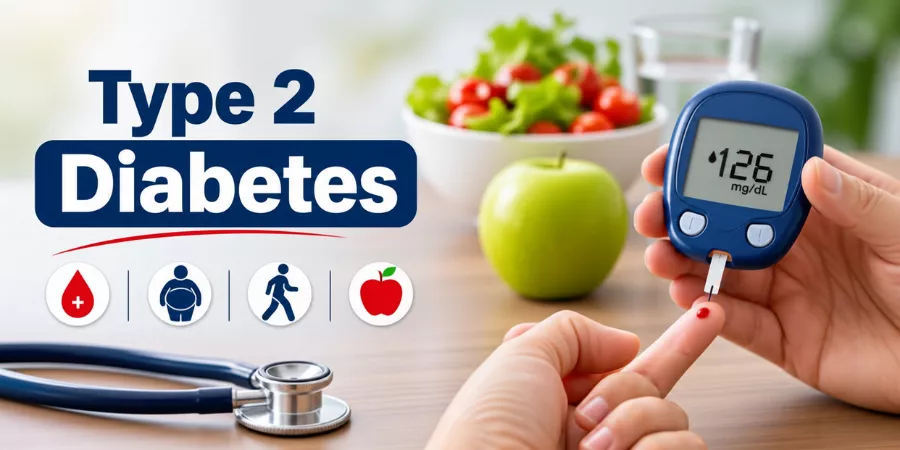
A closer look at how insulin resistance develops, why warning signs often go unnoticed, and what people can do to reduce their risk of developing diabetes.
Most people with early type 2 diabetes feel fine. They go to work, follow their usual routine and see nothing wrong, while their blood glucose creeps upward month after month. When symptoms finally show up, the condition has often been building for years.
Diabetes is also not just a sugar problem. The real issue is insulin, the hormone that lets glucose move out of the blood and into cells, where the body burns it for energy. When insulin stops doing that job properly, glucose stays in the bloodstream.
The numbers are large. A Lancet report released on World Diabetes Day 2024 counted more than 800 million adults living with diabetes, and 85–95% of adult cases are type 2. Roughly half of the people who have diabetes do not know it. The World Health Organization (WHO) calls diabetes a major public health concern, and it also says that lifestyle changes are the best way to prevent or delay type 2 diabetes. People who spot their risk early have the most room to act.
This article covers the early symptoms, the main risk factors and the screening tests, so readers can make decisions about their health before complications begin.
What is Type 2 Diabetes and How Does It Develop?
Type 2 diabetes is a chronic metabolic condition. Either the body cannot use insulin well, or the pancreas does not make enough of it to hold blood glucose at a healthy level. The pancreas produces insulin, and insulin carries glucose from the blood into the body’s cells.
The condition usually builds slowly through insulin resistance. The process runs in four steps:
- The body initially responds poorly to insulin: Muscle, fat and liver cells react less to insulin, so glucose struggles to get inside.
- The pancreas compensates: It makes extra insulin to keep blood sugar normal.
- The compensation becomes insufficient: After a while, the beta cells that make insulin cannot keep up with the demand.
- Blood glucose begins to rise: More glucose stays in the blood because cells are not absorbing it.
All of this can happen well before a diagnosis. Prediabetes sits in the middle: blood glucose is higher than normal but still below the diabetes threshold. In India, the ICMR-INDIAB study, published in The Lancet Diabetes & Endocrinology, estimated that 101 million people (11.4% of the population) have diabetes, while 136 million (15.3%) could have prediabetes. The researchers collected data from 113,043 participants.
Insulin resistance by itself does not mean someone has diabetes. The body can make up for it for years. Trouble starts when the pancreas can no longer keep pace, and glucose slowly climbs.
For that reason, symptoms are an unreliable guide. Someone can have real metabolic changes and feel perfectly well. Only a blood test picks up what daily life hides.
What Are the Early Symptoms of Type 2 Diabetes?
Symptoms in the early stages are sometimes hard to identify. Some individuals are aware of their condition because they have noticed drastic changes, while others remain completely unaware of it for years. As stated by the Centers for Disease Control and Prevention, the symptoms may arise slowly and unnoticed by people for a considerable amount of time. Furthermore, according to WHO, it is possible that mild or absent symptoms might lead to delays in diagnosis for very long.
Common warning signs include:
- Frequent urination: Extra glucose in the blood forces the kidneys to work harder, which increases urine output.
- Excessive thirst: Heavy urination drains fluid from the body, so thirst follows.
- Increased hunger: When cells cannot use glucose, the body asks for more energy.
- Unexplained weight loss: Some people lose weight without changing their eating habits, because the body cannot use glucose efficiently.
- Persistent fatigue: High or swinging blood glucose affects how the body handles energy.
- Blurred vision: Glucose changes can shift fluid in the eye and temporarily affect sight.
- Slow-healing wounds: High blood glucose interferes with normal healing.
- Recurrent infections: Some people get repeated skin, urinary tract or genital infections.
None of these signs proves diabetes. Thirst, tiredness and frequent urination have plenty of other causes. Even so, if several appear together or keep coming back, it makes sense to see a doctor.
Most people explain these changes away. Tiredness becomes a busy week, thirst becomes the weather, and extra bathroom trips become a sign of drinking more water. Any of those explanations may be true. When the changes persist, though, especially alongside other risk factors, a check is worth the time.
A lack of symptoms deserves the same attention. If a person waits for a clear warning, the best window for early action may already be gone.
What Are the Major Risk Factors for Type 2 Diabetes?
Diabetes rarely comes from one cause. Genetics, age, metabolic health, activity levels and environment all play a part.
The major type 2 diabetes risk factors include:
- Family history: A parent or sibling with type 2 diabetes raises a person’s risk.
- Prediabetes: Blood glucose that is already above normal points to a higher chance of developing diabetes.
- Excess body weight: Overweight and obesity, especially extra fat around the abdomen, are linked to insulin resistance.
- Physical inactivity: Long hours of sitting and little exercise can lower insulin sensitivity.
- Age: Risk generally rises with age, although younger adults and children can develop the condition too.
- History of gestational diabetes: Women who had diabetes during pregnancy face a higher risk later.
- Other metabolic conditions: High blood pressure, abnormal cholesterol and certain metabolic disorders add to the overall risk.
The CDC names these factors as key points when it assesses a person’s chance of developing diabetes.
India needs special attention here, particularly for family history and lifestyle. Body weight is a poor way to judge risk on its own. Someone who looks fit can still have insulin resistance or raised glucose, especially with other risk factors present. The researchers behind the Indian Diabetes Prevention Programme described their participants as younger, leaner and more insulin resistant than those in earlier Western and Chinese trials. A follow-up analysis made a similar point: Asian Indians have higher rates of insulin resistance than Europeans and other white populations despite being relatively nonobese.
Risk factors say nothing about personal failure. Genes, access to healthy food, working conditions, sleep and the chance to be active all shape metabolic health. The ICMR-INDIAB researchers tied the rise in India to changing lifestyles, migration to cities, erratic working hours, sedentary habits, stress, pollution and easy access to fast food.
Seeing these influences clearly makes prevention more practical. People can focus on realistic changes instead of guilt.
How is Type 2 Diabetes Diagnosed?
Symptoms cannot confirm diabetes. A doctor orders blood tests to measure glucose and decide whether the result is normal, prediabetes or diabetes.
Three tests are commonly used:
- HbA1c test
This test measures the percentage of haemoglobin that carries glucose. It reflects average blood glucose over roughly the last three months. - Fasting blood glucose test
This test measures glucose after at least eight hours without food or caloric drinks. It flags raised levels that may indicate prediabetes or diabetes. - Oral glucose tolerance test (OGTT)
This test measures glucose before and after the person drinks a glucose solution. It shows how well the body handles a sugar load.
These ranges are commonly used for non-pregnant adults:
| Test | Prediabetes | Diabetes |
| HbA1c | 5.7–6.4% | 6.5% or higher |
| Fasting blood glucose | 100–125 mg/dL | 126 mg/dL or higher |
| Two-hour OGTT | 140–199 mg/dL | 200 mg/dL or higher |
Source: National Institute of Diabetes and Digestive and Kidney Diseases (NIDDK) and CDC.
Doctors usually confirm a diagnosis with a repeat test. The exception is a person who has clear symptoms and a very high glucose reading. The doctor decides which test and which confirmation method fit the situation.
The HbA1c test has a practical advantage: it needs no fasting, which helps people who struggle with early morning appointments. Some medical conditions, however, can make HbA1c a less accurate reflection of average glucose, and a clinician may then add other tests.
A home glucose meter reading is not enough to diagnose diabetes.
How Can You Prevent or Reduce the Risk of Type 2 Diabetes?
People with prediabetes or other risk factors can change their outlook with lifestyle habits. Prevention does not call for a crash diet, costly supplements or punishing workouts. Small, steady changes that fit into normal life usually last longer.
The research backs this up. The US Diabetes Prevention Program (DPP) followed 3,234 overweight people with impaired glucose tolerance. Diet and exercise that produced 5–7% weight loss cut diabetes incidence by 58%, while metformin cut it by 31%. Older adults did especially well: participants aged 60 and over reduced their risk by 71%. The benefit also held up over time. Ten years after randomisation, diabetes incidence was still 34% lower in the lifestyle group than in the placebo group.
The Indian Diabetes Prevention Programme (IDPP-1) tested the same approach in South Asians. It enrolled 531 men and women aged 35–55 with impaired glucose tolerance and followed them for about three years. Cumulative diabetes incidence over three years reached 55.0% in the control group, compared with 39.3% in the lifestyle group. The relative risk reduction was 28.5% for lifestyle changes and 26.4% for metformin, and the number needed to treat to prevent one case was 6.4 for lifestyle modification. The control group result is a warning in itself: more than half developed diabetes within three years.
WHO recommends regular physical activity, healthy eating, a healthy body weight and no tobacco as the main preventive measures.
Here are some practical steps:
Choose balanced meals
- Include vegetables, whole grains, pulses and fibre-rich foods.
- Add protein such as lentils, beans, eggs, fish or other suitable options.
- Cut back on sugary drinks, refined carbohydrates and heavily processed foods.
- Pay attention to portion sizes instead of following strict diets.
Make physical activity part of the routine
- Aim for at least 150 minutes of moderate-intensity activity each week, where medically appropriate.
- Pick activities such as brisk walking, cycling or swimming.
- Add strength training on two or more days a week.
- Break up long stretches of sitting with short movement breaks.
Work towards a healthy body weight
For people carrying extra weight, even a modest loss can improve insulin sensitivity and metabolic health. Slow, sustainable progress works better than rapid weight loss.
Prioritise sleep and everyday health habits
Keep a regular sleep schedule, manage stress and avoid tobacco. All three support metabolic and heart health.
Take prediabetes seriously
Prediabetes gives people a chance to step in before blood glucose reaches the diabetes range. The CDC’s Diabetes Prevention Program uses structured lifestyle changes to help participants lower their risk. Its research-based programme aims for roughly 5–7% weight loss in participants with excess weight, plus at least 150 minutes of physical activity a week.
Prevention works best when it starts before any symptoms appear. People with prediabetes should build a personal plan and a follow-up testing schedule with their doctor.
Anyone wondering how to prevent type 2 diabetes will not find the answer in one single change. It comes from healthier eating, regular movement, sensible screening and habits that people keep up.
Why Early Detection and Regular Screening Matter
Early detection lets people deal with raised blood glucose before the condition advances or complications begin.
Uncontrolled diabetes can harm the heart, kidneys, eyes, nerves and blood vessels. Many of these complications develop slowly, so regular monitoring matters even for people who feel well. WHO reports that diabetes-related deaths rose by 70% between 2000 and 2020. The Lancet analysis also found that more than half of people with diabetes are not taking medication to control it.
Screening is worth discussing with a doctor if someone has:
- A parent or sibling with diabetes.
- A history of prediabetes or gestational diabetes.
- Excess body weight or limited physical activity.
- High blood pressure or abnormal cholesterol.
- Persistent symptoms linked to high blood glucose.
The right age and frequency for screening depend on personal risk, medical history and local clinical guidance.
For people who already have a diagnosis, follow-up visits, glucose monitoring where advised, taking medication as prescribed and routine check-ups, all lower the risk of complications.
Health checks should not wait for something to feel wrong. Many metabolic conditions cause no discomfort at all, and a routine blood test can show what months of waiting for symptoms never would.
Conclusion
Type 2 diabetes is a long-term condition, yet many of the factors behind it can be changed. Understanding insulin resistance, recognising warning signs and catching prediabetes early all help people act sooner.
A good first step is to find out your risk instead of assuming you are healthy because you feel fine. A talk with a doctor, a suitable blood test and a realistic lifestyle plan will show what needs attention.
Nobody has to overhaul their life overnight. A more balanced meal, a regular walk, better sleep or a screening appointment booked on time is a solid place to begin.
Medical note: This article is for general health education and does not replace medical advice, diagnosis or treatment. Consult a qualified healthcare professional for individual screening recommendations and treatment decisions.