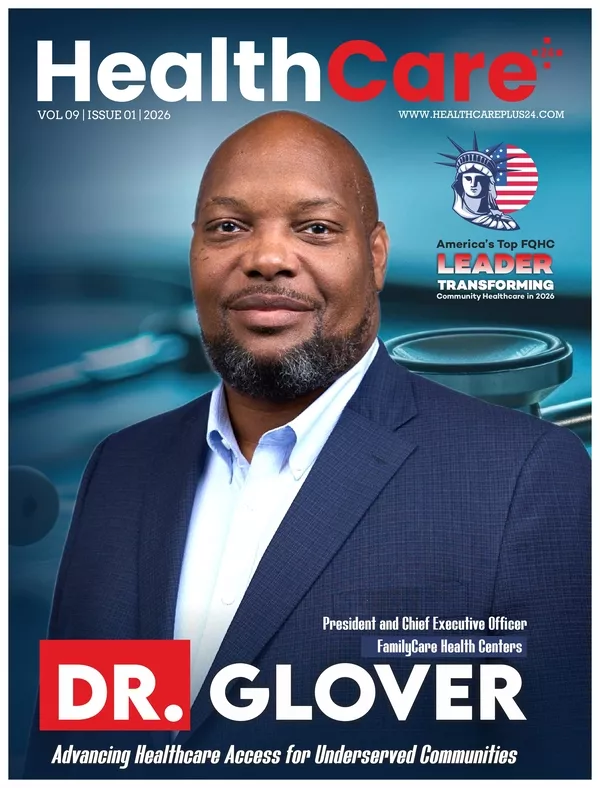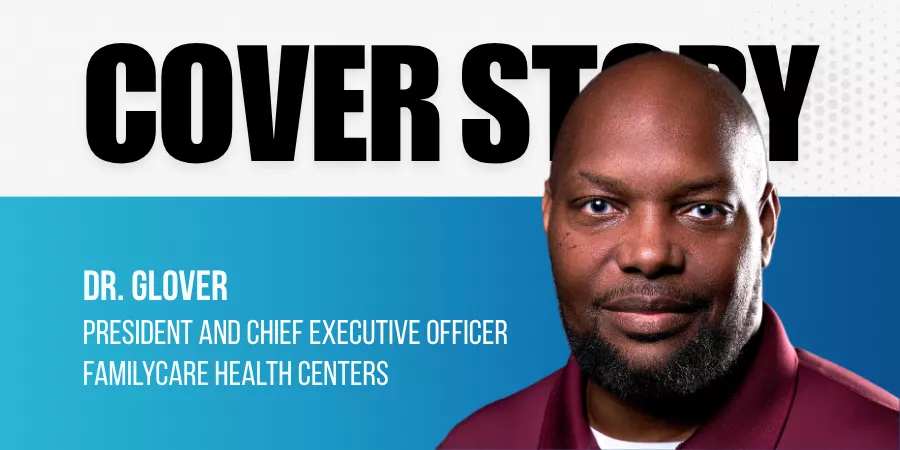
What happens to a child when the healthcare they need depends on what their family can afford? For many families, that question conveys real consequences, especially when money is tight and the healthcare system feels difficult to navigate. Community health centers have long helped families find care when other doors feel out of reach, and for Dr. Glover, that mission carries a deeply personal meaning.
Community health centercenters have been part of Dr. Glover’s life since childhood. Growing up in a low-income household with a single mother in St. Louis, he received care at a community health centercenter. At that age, he did not understand the healthcare system or the challenges involved in accessing it. He understood something far simpler: there was a place where his family could receive quality care regardless of their circumstances.
That experience stayed with him because it showed him what access to healthcare can mean in a family’s life. A health center can become more than a place where someone goes when they are unwell. It can give families a sense of security and help shape the choices and opportunities available to them. For Glover, that early experience planted an understanding that access to quality healthcare can change a person’s life trajectory.
Years later, his career brought him back to the same community health center that had cared for him as a child. Glover had the opportunity to help lead its acquisition, creating a remarkable full-circle moment in his life. The experience reinforced his belief that healthcare is a right and brought greater clarity to his purpose as a leader.
Today, as President and Chief Executive Officer of FamilyCare Health Centers, Glover holds that personal history into his leadership. His passion for healthcare comes from knowing firsthand what community health organizations can mean to patients and families. He remains committed to removing barriers, strengthening communities, and ensuring that every person is treated with dignity while having access to high-quality care.
His story gives his work a rare sense of continuity. The child who once depended on a community health center grew into a leader helping protect the same kind of access for others. What began as a personal experience in St. Louis became a lifelong understanding of why healthcare access is important.
From IT to Healthcare Leadership
Some careers follow a clear line from education to profession, while others develop through experiences that gradually change what meaningful work looks like. Healthcare leadership, in particular, often brings together technology, business, people, and public service in ways that are difficult to predict early in a career.
Dr. Glover’s transition from information technology into community healthcare leadership was driven by a desire to make a broader impact. Working in IT taught him how systems, data, and technology can improve organizational performance, but he became increasingly interested in the people, strategy, and mission that underpin them.
Community healthcare leadership allowed him to combine his technical and business experience with a deeply personal purpose. He understood firsthand the difference these organizations make. Taking on administrative leadership roles allowed him to help shape strategy, expand access, and build stronger systems of care for underserved communities.
Finding His Life’s Mission
A professional role can sometimes reveal the real weight of a responsibility only after a person steps into it. For leaders working in community healthcare, decisions made inside an organization can have consequences that reach directly into the lives of patients and families.
The defining moment came when Dr. Glover accepted his first CEO role at a community health center. He quickly realized the profound impact his leadership decisions could have on the lives of the patients, families, and communities he served. He understood that his work could help expand access to care and create opportunities for people who might otherwise go without essential services.
That realization inspired him to dedicate his career to community healthcare leadership and to continue helping others in such a meaningful way.
When Experience Shapes Leadership
Quality healthcare leadership involves decisions about budgets, services, staffing, growth, and access. Yet behind every one of those decisions are people whose circumstances can be very different from those sitting in the leadership office. Personal experience can therefore influence how a leader understands responsibility.
Dr. Glover’s personal journey has taught him to lead with empathy, fairness, and purpose. Because he understands what it means to rely on a community health center, he views every decision through the perspective of the patients and families he serves. He never wants financial circumstances, geography, or other barriers to prevent someone from receiving high-quality care.
It has also taught him that compassion must be supported by accountability, innovation, and sound strategy. Leading a mission-driven organization means caring deeply about people while ensuring the organization remains strong and sustainable. His journey reminds him that leadership is about using the opportunity and responsibility he has been given to improve the lives of others.
When Recognition Becomes Personal
Awards can recognise an individual, but leadership in community healthcare is built through the work of many people. The significance of recognition can therefore extend beyond the person whose name appears on it, particularly when that person has a personal connection to the field.
Being recognised as “America’s Top FQHC Leader Transforming Community Healthcare in 2025” is deeply meaningful to Dr. Glover, both personally and professionally. As someone who received care from a community health center as a child, being recognized for leading and transforming community healthcare makes the recognition especially meaningful. It affirms his belief that his beginnings do not limit what he can accomplish or the difference he can make in others’ lives.
He also views this recognition as a reflection of the extraordinary teams he has worked with, especially his FamilyCare team. Transformation is never the work of one individual. It requires dedicated associates, an engaged board, strong community partners, and patients who trust them with their care.
He is honored by the recognition, but even more grateful that it brings attention to the essential work of community health centers and the people who make that work possible.
Three Principles Behind Every Decision
Leading a community health center means making decisions that can affect patients, , associates finances, services, and the future of the institution. In that environment, a clear set of principles can provide direction when the right decision is rarely the easiest one.
Dr. Glover’s leadership philosophy is simple: lead fairly, act kindly, and think strategically. Those principles guide every major decision he makes.
Leading fairly means making decisions with integrity, consistency, and accountability.
Acting kindly means considering how those decisions will affect patients, associates, and communities.
Thinking strategically means looking beyond the immediate issue to ensure that FamilyCare remains strong, innovative, and sustainable for the future.
Every decision must advance the mission, improve access to high-quality care, and responsibly steward the resources entrusted to him. Even when a decision is difficult, those values keep him focused on doing what is right for the people he serves and the organization he is privileged to lead .
Lessons From Multiple Health Centers
Every community brings its own circumstances, expectations, and healthcare needs. A leadership approach that works in one place may require adjustment in another, making the ability to listen and understand local realities an important part of leading FQHCs.
Leading multiple federally qualified health centers has taught Dr. Glover that every organization and community is different, but the fundamentals of effective leadership remain consistent. A leader must listen first, understand the community’s needs, build trust, and create a shared vision that associates and partners can support.
He has also learned that culture is the foundation of performance. Strategy succeeds only when people understand the mission, feel valued, and are accountable for results. At the same time, mission-driven leadership requires sound business discipline. Expanding access and improving outcomes are possible only when the organization is operationally strong and financially sustainable.
Most importantly, leadership is never a solo effort. Meaningful and lasting change depends on shared leadership and collaboration.
Why FQHCs Matter
Access to healthcare can look very different depending on where a person lives, what resources they have, and whether appropriate services are available nearby. This makes community-based healthcare organizationorganizations especially important in places where conventional access points may be limited.
FQHCs are uniquely important because they provide comprehensive, high-quality care to people regardless of their income, insurance status, or ability to pay. They are located in the communities where access is often most limited, including rural areas and underserved urban neighborhoods.
What truly distinguishes FQHCs is their community-based model. Patients help shape how health centers operate through governing boards, allowing services to reflect local needs. FQHCs also integrate primary care with services such as dental, behavioral health, pharmacy, women’s health, and social support. By addressing both medical needs and barriers such as transportation, food insecurity, and affordability, they care for the whole person.
In today’s healthcare landscape, FQHCs do more than fill gaps. They prevent illness, manage chronic conditions, reduce avoidable emergency department visits, and strengthen communities’ overall health. They are essential to building a more accessible, equitable, and sustainable healthcare system.
Bringing Care Closer to Communities
Distance can become a healthcare barrier when patients have limited transportation, demanding work schedules, school commitments, or few services available close to home. Expanding a healthcare network therefore involves more than adding facilities. It means thinking about where and how people actually access care.
During his tenure, Dr. Glover has focused on bringing care closer to where people live, work, and attend school. Today, FamilyCare has grown to serve more than 45,000 patients through 22 locations across four West Virginia counties, with school-based services reaching students in more than 30 schools.
FamilyCare has expanded access by opening urgent care locations, extending operating hours, increasing walk-in availability, and developing new community partnerships. The organization also launched a community pharmacy to improve access to affordable medications and expanded integrated services, including behavioral health, nutrition, vision, and social support.
Equally important, FamilyCare has worked to address barriers beyond the examination room through initiatives such as its food-box program. These efforts demonstrate the organization’s commitment to meeting patients where they are and ensuring that high-quality, comprehensive care is accessible to everyone.
Barriers Vulnerable Communities Face
Healthcare access is influenced by much more than the availability of a doctor. The cost of treatment, insurance coverage, geography, transportation, housing, food security, and availability of specialists can all determine whether a person receives care when it is needed.
Dr. Glover identifies the greatest challenge as the fact that access to healthcare is still too often shaped by a person’s income, insurance status, location, race, or zip code. Vulnerable populations face rising costs, coverage gaps, transportation difficulties, and long wait times. These barriers are especially significant in rural communities, where provider shortages and limited specialty services can make timely care difficult to obtain.
Health outcomes are also influenced by factors beyond the healthcare system, including food insecurity, unstable housing, limited broadband access, and the growing need for behavioral health and substance use services. When care is fragmented or delayed, manageable conditions often become serious and more expensive.
At the same time, safety-net providers face increasing operating costs, workforce pressures, and uncertainty in reimbursement and public funding. Addressing these challenges will require stable investment in primary care, stronger community partnerships, an expanded healthcare workforce, and policies that recognize healthcare access as essential to the well-being of individuals, families, and communities.
Growing Where Care is Needed
Expansion can bring services to more people, but growth alone does little if it fails to respond to a real community need. For a healthcare organization serving diverse populations, each new service or location has to answer a practical question: will it make care easier to reach and use?
FamilyCare’s vision is to be the provider of choice for better health in the communities it serves. As FamilyCare expands, its focus remains on providing comprehensive, high-quality care that leads to healthier individuals, families, and communities.
FamilyCare does not pursue growth simply to become larger. It expands when there is an unmet need and when FamilyCare can make care more accessible, convenient, and responsive. That means making services more convenient, integrating primary care with behavioral health, dental, pharmacy, urgent care, and other essential services, and addressing the nonmedical factors that influence health.
The organization’s goal is to build a sustainable and innovative system of care that meets people where they are, earns their trust, and ensures that every West Virginian has the opportunity to achieve better health.
Treating the Whole Person
A person may enter a healthcare setting with one concern while several other factors are affecting that concern. Mental health, oral health, nutrition, medication access, vision, and social circumstances can influence physical health, making fragmented care difficult for both patients and providers.
Integrated care is essential because patients do not experience their health needs in isolation. Physical health, oral health, behavioral health, vision, medication access, nutrition, and social circumstances are deeply connected. When these services operate separately, important information can be missed, care can be delayed, and patients must navigate a complicated system on their own.
By coordinating services within a single organization, FamilyCare can identify needs earlier, improve communication among providers, reduce barriers, and create a more comprehensive plan of care. It is also more convenient for patients, particularly those facing transportation, financial, or scheduling challenges.
Integrated care allows FamilyCare to treat the whole person rather than a single condition. That leads to better care coordination, stronger patient relationships, improved management of chronic conditions, and healthier communities.
When Growth Reaches More People
Patient numbers provide one way to measure the reach of a healthcare organization. Behind every number, however, is an individual or family gaining access to services that may have been difficult to reach before. For Dr. Glover, that human impact gives organizational growth its real meaning.
He is most proud of how FamilyCare has evolved into a more accessible, comprehensive, and community-centered healthcare system. During his tenure, the organization has grown from serving approximately 32,000 patients to more than 45,000.
He is equally proud of the organizational culture and leadership team they have built. Expanding access requires more than opening new locations. It requires dedicated associates, operational discipline, financial stewardship, innovation, and a shared commitment to the mission.
His greatest source of pride is knowing that FamilyCare’s growth represents thousands of additional people receiving the care they need, closer to home and with dignity.
The Next Era of FQHC Innovation
Technology is changing how healthcare organizations collect information, communicate with patients, monitor conditions, and manage operations. For FQHCs, these developments could be particularly valuable when they help address the practical challenges faced by patients and care teams.
Artificial intelligence, advanced analytics, and automation will have a significant impact on FQHCs. Used responsibly, these tools can reduce administrative burdens, improve clinical decision-making, identify patients at risk, and allow providers to spend more time caring for patients. Strong governance will be essential to ensure these technologies are secure, equitable, and aligned with the organization’s mission.
Telehealth, remote patient monitoring, mobile services, and other hybrid care models will also help FQHCs reach patients beyond traditional clinic walls. These innovations are especially important for rural communities and patients facing transportation, mobility, or scheduling barriers.
Dr. Glover also believes the transition to value-based reimbursement will accelerate the use of population-health data and integrated, team-based care. The most successful innovations will help FQHCs expand access, strengthen the workforce, improve outcomes, and preserve the personal relationships that remain at the heart of community healthcare.
What Future Healthcare Leaders Need
The future of community healthcare depends partly on the people who will take responsibility for these organizations next. Leadership skills can be learned through experience, but the qualities that shape how a person uses authority are equally important.
Dr. Glover values integrity, empathy, accountability, self-awareness, and strategic thinking. Future healthcare leaders must be able to make difficult decisions, communicate transparently, and remain focused on the people affected by those decisions. They should also be curious, adaptable, and willing to challenge established practices when better solutions are possible.
He looks for leaders who are committed to service rather than status. The strongest leaders listen, build trust, accept responsibility, and help others succeed. Technical knowledge can be developed, but character, humility, and a genuine commitment to the mission are essential.
His goal is to develop leaders who can achieve results while treating people fairly.
Creating a Patient-First Culture
Culture becomes visible through the small interactions that take place every day. The way an associate responds to a concern, communicates with a patient, or works with a colleague can shape how people experience an organization.
One of the most important initiatives supporting FamilyCare’s culture is its Patient First program. The program teaches associates the organization’s values of Honesty, Excellence, Accountability, Respect, and Stewardship while establishing clear expectations for every patient interaction. All associates are required to complete Patient First training every two years, ensuring that these principles remain central to how FamilyCare serves its patients and how associates work with one another.
Patient First reinforces that culture is reflected in everyday behaviors, including how associates communicate, respond to concerns, and demonstrate compassion and respect. By creating a shared understanding of what patients and colleagues should expect from every FamilyCare associate, the program helps provide a consistent, welcoming, and patient-centered experience throughout the organization.
What Keeps the Mission Moving
Two decades in one field can change a person’s understanding of the work. The challenges may evolve, yet certain moments continue to remind a leader why the work matters in the first place.
What continues to motivate Dr. Glover is knowing that the work makes a meaningful difference in people’s lives. Every new service, expanded location, or improved process represents another opportunity for someone to receive care who might otherwise go without. He never loses sight of what access to compassionate, high-quality care can mean to a patient and family.
He is also inspired by the dedication of FamilyCare’s associates and the resilience of the communities they serve. Even after more than two decades, there are still new challenges to solve, leaders to develop, and opportunities to improve healthcare. The responsibility to help create healthier communities continues to give his work purpose and motivates him every day.
Advice for the Next Generation
Leadership in community healthcare comes with a particular responsibility because the work is closely tied to the needs of the people being served. For professionals entering the field, understanding those needs can be as important as developing technical or managerial skills.
Dr. Glover advises young professionals to begin by developing a genuine understanding of the communities and patients they hope to serve. They should listen carefully, remain close to the mission, and never allow professional advancement to become more important than the people who depend on the organization.
He recommends building experience across multiple areas of healthcare, including operations, finance, quality, technology, workforce development, and governance. They should seek mentors, accept challenging assignments, and remain open to feedback. Some of the most valuable growth will come from situations that stretch their abilities and require them to learn from mistakes.
Most importantly, he encourages future leaders to focus on becoming a leader before pursuing a leadership title. They should act with integrity, treat people fairly, accept accountability, and help others succeed.
Community healthcare needs leaders who combine compassion with sound strategy and who are willing to serve with both humility and courage.
A Legacy Measured in Lives
A healthcare leader’s influence can continue long after a particular role ends. The organizations they shape, the people they mentor, and the communities they serve can carry that influence forward in ways that are difficult to capture through a title or award.
As a featured leader in HealthCare Plus 24’s “America’s Top FQHC Leader Transforming Community Healthcare in 2026,” Dr. Glover hopes his legacy is defined by the people and communities that are stronger because he had the opportunity to serve. He wants FamilyCare and every organization he has led to be more accessible, sustainable, and responsive to their communities’ needs. Most importantly, he hopes patients have felt respected, valued, and confident that high-quality care was available when they needed it.
He also hopes to leave behind a generation of leaders who understand that mission and performance must work together. Leadership requires compassion, accountability, courage, and the willingness to develop others. If the leaders he has mentored continue to expand access and improve lives, the impact of his work will extend far beyond his own career.
His journey demonstrates that where a person begins does not determine how far they can go or how many lives they can touch.
A Message to Healthcare Professionals
Healthcare professionals around the world work within different systems, communities, and circumstances. Yet the daily responsibility remains familiar: care for people, remove barriers where possible, and keep improving the systems through which that care is delivered.
Dr. Glover’s message to healthcare professionals around the world is to never underestimate the impact of their work. Every patient treated with dignity, every barrier removed, and every improvement made contributes to a healthier and more equitable future. Meaningful change often begins with small, consistent actions rooted in compassion, courage, and purpose.
The challenges facing healthcare are too complex for any one individual or organization to solve alone. Professionals must collaborate across professions, sectors, and communities while listening closely to the people they serve. They must also remain willing to innovate without losing the human connection at the heart of healthcare.
He encourages healthcare professionals to continue advocating for those whose voices are too often unheard. His own guiding principles remain clear: “Lead fairly, act kindly, and think strategically.”
When knowledge and resources are combined with a shared commitment to service, healthcare professionals can build systems that strengthen communities and give every person a meaningful opportunity to live a healthier life.