“Hope is not a strategy, but it’s what keeps the strategy alive!”
Some leaders carry that line as a quiet engine behind every decision. When the system grows heavy and care feels distant, they look for a path that restores dignity through clarity, measurement, and timely action.
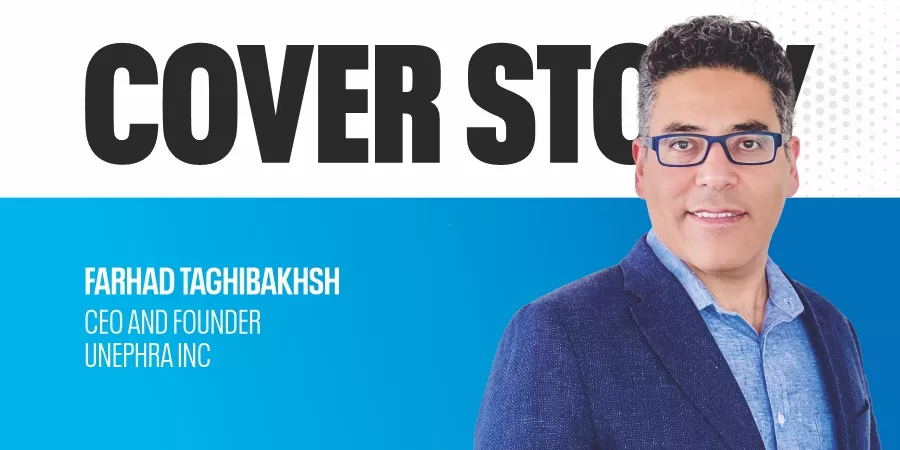
Farhad Taghibakhsh is one of those leaders. He believes the future of healthcare lives closer to the person, guided by the unique signals of each body, and supported by intelligent tools that free clinicians to do their best work. His mission is simple to state and ambitious to execute: make care proactive, personalized, and accessible at home while lowering the total cost for society.
An electrical engineer by training, with a PhD from the University of Waterloo, Farhad has spent his career advancing sensing technologies and translating them into real clinical value. While at Stanford Medicine, he met his future co-founder, Dr. Pedram Fatehi and forged collaborations that shaped a company built around physiology-guided care, called Unephra, where he serves as CEO and founder.
So, what drives Farhad’s enduring influence, and why is he being recognized as one of The 5 Most Influential Healthcare Leaders to Follow in 2025? Let’s explore the story behind the strategist, the innovator, and the global builder.
A Journey Beyond Borders
From a young age, Farhad was endlessly curious about how things work, often taking apart his toys to find out. That curiosity evolved into a career in engineering, fueled by a deep interest in physics, astronomy, or biology.
When he was young, Farhad never imagined he would one day establish a health-tech startup. “Where we end up in life is often the product of countless interactions with family, friends, teachers, colleagues, and mentors,” Farhad expressed. What he did know early on was that he wanted to pursue the best education at one of the top universities in the U.S.
After finishing his masters in Tehran, Farhad was admitted to a U.S. PhD program, but his student visa was denied, not once, but four times. On the last attempt, the officer told him he should “forget about the U.S.”
Farhad returned to his hometown in Iran and began teaching at local colleges. A few years later, he moved to Canada to pursue a PhD in electrical engineering at the University of Waterloo, the country’s top engineering school, where his focus was developing sensors for medical applications.
Later, his PhD examiner offered a postdoctoral position in Medical Biophysics at the University of Toronto, which he gladly accepted. While presenting at a medical imaging conference in Florida, he met a Stanford professor whose research closely aligned with Farhad’s.
The professor invited Farhad to join his lab at Stanford Medicine. Just a few months later, exactly 10 years after being told to forget about the U.S., Farhad found himself at one of the most prestigious institutions in the world.
With Unephra, Farhad is channeling that guiding passion and collaboration into developing sensing technologies that measure the human body’s inner workings at a personalized, physiological level. In a way, Unephra is the natural outcome of a lifelong fascination with discovery.
In the early stages of the company, the biggest challenge for Farhad was clearly communicating their vision and the value they bring. On one side, they had a passionate, committed team, while on the other, an audience unfamiliar with them, often giving only 30 to 60 seconds to capture their attention and spark interest.
Through practice and guidance from mentors, Farhad learned how to identify the right audience, tailor the message to their perspective, and deliver it with clarity and energy. That ability to connect quickly and meaningfully has been a turning point in advancing Unephra’s mission.
Making Healthcare Accessible
Unephra’s mission is to transform disease management in two fundamental ways: how it’s performed and where it’s delivered. The team believes care should be guided by each person’s unique physiology, not by generalized textbook averages, and delivered in the comfort of one’s home, when possible, rather than in hospitals.
“While centralized hospital-based care was the right model for past centuries, the future lies in distributed, personalized care that maximizes health outcomes while minimizing costs,” Farhad said. “At Unephra, we’re making that future a reality by enabling precision insights that bring effective, proactive healthcare directly to the patient.”
Leadership Rooted in Values
Talking about his leadership style and values, Farhad says, “I’ve always been a hands-on person, long before I learned there was a term for it, I was ‘leading by example.’ For me, leadership starts with demonstrating the standards I expect from others, whether that’s in work ethic, problem-solving, or collaboration.”
This approach demands commitment, integrity, and focus. Farhad believes in creating an environment where people feel empowered to take ownership, knowing that he’s right there in the trenches with them. His decisions are guided by a commitment to transparency, delivering on promises, and building trust: the values that he believes are essential for long-term success.
When it comes to inspiring other professionals in the industry, Farhad does that by advocating for change by consistently highlighting better alternatives and helping to coordinate and align stakeholders.
He believes that in a highly regulated system like healthcare, transformative change doesn’t happen overnight. While a vision may be bold, implementation often relies on incremental improvements. The key to achieving large-scale impact is making those incremental changes at every step of the process, and ensuring they are coordinated and aligned across the entire ecosystem.
We asked Farhad for any advice he would offer to emerging entrepreneurs looking to make a meaningful impact in a healthcare space. He says, “The best advice I can offer, and the one I remind myself of during challenges, is to be patient. Healthcare innovation is a long game. It’s a highly regulated, complex ecosystem where meaningful change takes time. Patience, paired with perseverance, is essential to navigate setbacks, build trust, and ultimately make a lasting impact.”
Understanding the Challenges and Trends
Farhad believes the two most pressing global healthcare challenges are the aging population and rising costs; issues affecting both developed and developing nations. As science and technology extend life expectancy, we face a growing demographic that generates less income but often requires more intensive care. Addressing these matters sustainably demands more than incremental improvements; it requires a fundamental shift in how we deliver care, improving quality while significantly reducing costs.
Over the next five years, Farhad sees personalized, precision medicine taking center stage, driven by AI-powered diagnostics and therapeutics, and delivered increasingly by AI agents and robotics.
“Our understanding of human physiology is advancing rapidly, both at the macro level (organs and systems) and the micro level (cellular and molecular). This knowledge will enable care that is more targeted, effective, and proactive. At the same time, healthcare will become more distributed and less centralized, improving access, lowering costs, and shifting the focus from treatment to prevention,” Farhad added.
A Legacy of Excellence
Through Unephra, Farhad wants to leave a legacy of shifting healthcare from reactive, one-size-fits-all treatment to proactive, personalized care that people can access from home. He hopes their work not only improves outcomes and lowers costs but also inspires a new standard, where decisions are guided by an individual’s unique physiology rather than averages.
“If, years from now, people live longer, healthier lives because technology quietly monitored, informed, and empowered them, I’d consider that the most meaningful impact we could make,” Farhad concluded.