High blood pressure, medically called hypertension, is when the force of blood against artery walls stays consistently too high, defined as 130/80 mm Hg or above under current US guidelines. It rarely causes symptoms, which is why it damages the heart, kidneys, brain, and arteries for years before most people know they have it. Diagnosis requires multiple elevated readings, not just one.
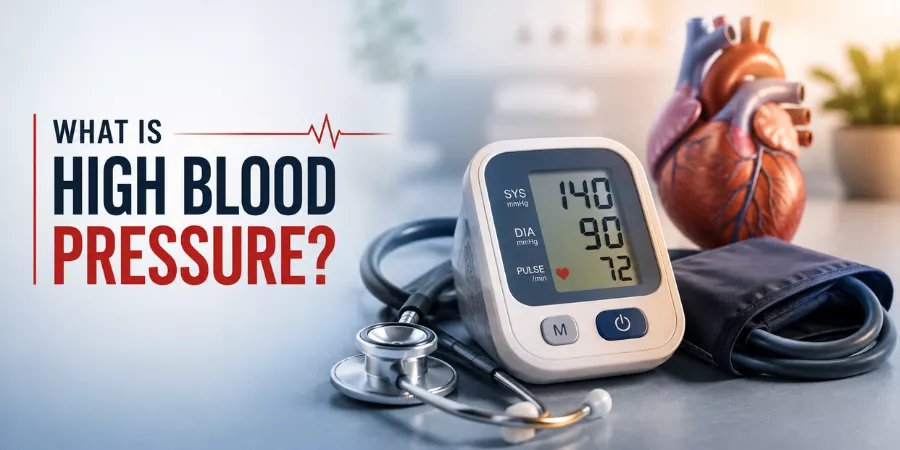
What is High Blood Pressure?
High blood pressure usually means the blood pushes against artery walls with more force than the body can safely sustain.
An estimated 1.4 billion adults aged 30 to 79 years had hypertension in 2024, a number that has more than doubled since 1990, according to WHO’s second Global Report on Hypertension.
That is nearly one in 5 people on the planet walking around with a condition that, left unmanaged, steadily damages their most vital organs.
High blood pressure, hypertension, happens when blood pushes against arterial walls with too much force, consistently over time. A single elevated reading does not confirm the diagnosis. Doctors look for persistently elevated measurements across multiple occasions before concluding that someone has it.
Only one in 5 people with hypertension has the condition adequately controlled, according to WHO. That means more than one billion people have hypertension without any treatment.
Those numbers are not improving fast enough.
What are the Blood Pressure Ranges?
Blood pressure is written as two numbers. The top figure, systolic, measures pressure when the heart beats. The bottom, diastolic, measures pressure between beats.
| Category | Systolic (mm Hg) | Diastolic (mm Hg) |
| Normal | Less than 120 | Less than 80 |
| Elevated | 120–129 | Less than 80 |
| Stage 1 Hypertension | 130–139 | 80–89 |
| Stage 2 Hypertension | 140 or higher | 90 or higher |
| Hypertensive Crisis | Higher than 180 | Higher than 120 |
A hypertensive crisis, readings above 180/120 mm Hg, requires immediate medical attention regardless of how the person feels in that moment.
Can You Feel High Blood Pressure? What are the Symptoms?
Usually, no. That is the entire problem.
High blood pressure earned its nickname, the “silent killer,” because it causes no noticeable symptoms during the years it silently damages blood vessels and organs. People feel completely fine while their arteries are being harmed.
High systolic blood pressure was the single largest contributor to global cardiovascular disease mortality, responsible for an estimated 10.85 million deaths in 2021, according to the American Heart Association’s 2025 Statistics Update. Every one of those people had a blood pressure reading at some point. Many of them had no idea it was elevated.
High blood pressure symptoms that need urgent evaluation:
- Sudden, severe headache, particularly at the back of the head (what many call a high blood pressure headache).
- Visual disturbances or blurred vision
- Chest pain or tightness
- Shortness of breath
- High blood pressure and dizziness occurring suddenly and without clear cause.
- A nosebleed that will not stop
High blood pressure symptoms in women can include fatigue, facial flushing, and headache, though none of these are reliable indicators on their own. They overlap with too many other conditions.
High blood pressure symptoms in men follow a similar pattern. Men, however, are statistically more likely to develop hypertension at a younger age, according to the American Heart Association.
A less common but important clinical picture is high blood pressure and low heart rate occurring together. This combination can point to underlying cardiac conduction issues or medication side effects, and warrants prompt evaluation.
What Causes High Blood Pressure?
There are two distinct types, and they behave differently:
Primary Hypertension
This is by far the most common type, responsible for roughly 90 to 95% of all cases. It builds gradually over years with no single identifiable trigger. The usual contributors:
- Age = arteries naturally stiffen with age, reducing their ability to absorb pressure.
- Genetics = family history raises risk significantly
- Lifestyle = physical inactivity, high sodium intake, excess body weight, smoking, and heavy alcohol use all push BP upward.
- Gradual arterial changes = years of low-level inflammation and arterial stiffening add up slowly.
Secondary Hypertension
This type has a specific underlying cause and typically appears more suddenly. Common culprits include kidney disease, hormonal disorders such as primary aldosteronism or thyroid dysfunction, obstructive sleep apnea, and certain medications, including NSAIDs, some decongestants, hormonal contraceptives, and stimulants.
High Blood Pressure in Pregnancy
High blood pressure in pregnancy sits in its own clinical category entirely. It includes gestational hypertension, preeclampsia, and chronic hypertension that predates the pregnancy. Preeclampsia, characterised by elevated BP and protein in the urine after 20 weeks, can escalate rapidly and is among the leading causes of maternal and fetal complications worldwide. Any elevated reading during pregnancy warrants same-day medical attention.
Risk Factors for High Blood Pressure
| Risk Factor | What the Evidence Shows |
| Age over 55 | Risk increases sharply with each decade |
| Obesity (BMI over 30) | Each 5 kg/m² BMI increase raises risk approximately 20% |
| High sodium diet | Strongly linked across population studies |
| Physical inactivity | Sedentary adults face 30 to 50% higher risk |
| Smoking | Raises BP acutely and causes long-term vascular damage |
| Heavy alcohol use | More than two drinks daily raises risk considerably |
| Diabetes | Frequently co-occurs; each condition worsens the other |
| Family history | One parent with hypertension roughly doubles individual risk |
If recent trends continue, hypertension will affect more than 180 million US adults by 2050, while healthcare costs related to cardiovascular disease are expected to rise by 300%, according to the American Heart Association.
Why is High Blood Pressure So Dangerous?
The damage from sustained high BP is cumulative and affects multiple organ systems simultaneously.
- Arteries stiffen over time and get constricted if there is too much pressure eventually. Then, the heart pumps more, and organs get less blood.
- Heart disease like coronary artery disease, heart failure, and left ventricular hypertrophy is the outcome of sustained high blood pressure. In 2023 919 032 Americans succumbed to cardiovascular disease, which is one death every 34 seconds on average. CDC statistics.
- Stroke, there is a considerable jump in the incidence of the stroke if BP remains high. High Blood Pressure continues to be the most significant factor that can be modified through lifestyle, etc. for both stroke types (ischemic & hemorrhagic stroke).
- Kidney disease, high blood pressure damages the tiny filtering blood vessels within the kidneys, which leads to kidney disease. As a result, the kidney function goes down slowly but irreversibly.
- Eye damage, damage to the eye by high blood pressure often means a gradual change in sight and, at a serious enough stage, even blindness, if it leads to hypertensive retinopathy.
- Cognitive decline and dementia, midlife hypertension is being increasingly recognized as the cause of cognitive decline and dementia. The WHO places hypertension among the top risk factors that are modifiable and contribute the most to dementia. Based on an article reviewing the 2025 Global WHO Report by The Lancet, one of the most significant preventable causes of heart attack stroke chronic kidney disease, and dementia is the persistence of hypertension that is either undiagnosed or uncontrolled.
Signs of High Blood Pressure: How is it Diagnosed?
Diagnosis is straightforward, but it requires doing it properly.
- Multiple readings matter: One elevated measurement at a clinic means little on its own. Doctors want to see consistently elevated readings across different occasions before confirming hypertension.
- White-coat hypertension is real. Some people’s BP spikes in clinical settings purely from anxiety, then returns to normal at home. Home monitoring helps separate this from genuine hypertension.
- Ambulatory blood pressure monitoring (ABPM), wearing a portable device that records readings over 24 hours, provides the most complete picture and is considered the gold standard for diagnosis in many clinical guidelines.
Home monitoring tips:
- Sit quietly for 5 minutes before measuring
- Keep your back supported, feet flat on the floor, arm at heart level
- Avoid caffeine, exercise, and smoking for 30 minutes beforehand
- Take two readings, one minute apart, and record both
- Measure at the same time each day
- Share the log with your doctor
How to Lower High Blood Pressure
Lifestyle Changes First
For Stage 1 hypertension without other cardiovascular risk factors, lifestyle modification is the first clinical step, and the evidence for it is solid.
The DASH diet for high blood pressure:
The Dietary Approaches to Stop Hypertension eating pattern has the most robust clinical evidence behind it. A meta-analysis of 17 randomised controlled trials found the DASH diet reduced systolic blood pressure by 6.74 mm Hg and diastolic blood pressure by 3.54 mm Hg, published in a systematic review of DASH trials. That is a meaningful reduction achievable through diet alone, without medication.
The DASH pattern focuses on:
- Fruits, vegetables, and whole grains
- Low-fat dairy
- Lean proteins, particularly fish and legumes
- Sodium reduced to ideally below 1,500 mg per day for those with high blood pressure
- Limited saturated fats, sweets, and sugary drinks
Other lifestyle changes with measurable BP effects:
- Physical activity: 150 minutes of moderate aerobic exercise weekly can lower BP by 5 to 8 mm Hg on average, according to the American Heart Association.
- Weight reduction: losing 5 to 10% of body weight produces measurable drops in BP.
- Smoking cessation: reduces cardiovascular risk immediately and continues improving over time.
- Alcohol reduction: cutting to one drink per day or fewer has documented BP-lowering effects.
- Sleep: poor or short sleep independently raises BP; seven to nine hours is the consistent clinical recommendation.
- Stress management: chronic stress contributes to sustained BP elevation through cortisol and adrenaline pathways.
High blood pressure remedies often discussed: Potassium-rich foods, leafy greens, bananas, sweet potatoes, are well-supported by evidence, as is sodium reduction. The DASH diet combines both effectively.
High Blood Pressure Medication
When lifestyle changes alone are insufficient, or when Stage 2 hypertension or other cardiovascular risk factors are present, high blood pressure medication becomes necessary.
| Drug Class | How It Works |
| ACE inhibitors | Block a hormone that narrows blood vessels |
| ARBs | Similar to ACE inhibitors, different molecular pathway |
| Calcium channel blockers | Relax and widen arterial walls |
| Thiazide diuretics | Reduce fluid volume in circulation |
| Beta-blockers | Slow the heart rate and reduce cardiac output |
Most people with Stage 2 high blood pressure need two or more medications to reach target BP. Taking medication as prescribed, consistently, not only when symptoms appear, is critical. Stopping abruptly can cause rebound elevation that is sometimes more dangerous than the original readings.
Only 28% of low-income countries report that all WHO-recommended hypertension medicines are generally available in pharmacies or primary care facilities, according to the WHO 2025 Global Report on Hypertension. Medication access remains a significant global barrier to control.
When Should You See a Doctor About High Blood Pressure?
- Any reading consistently at or above 130/80 mm Hg on home monitoring.
- Any reading above 180/120 mm Hg, seek medical attention immediately.
- Any elevated reading during pregnancy, same day.
- Headache, chest pain, vision changes, or sudden dizziness accompanying high readings.
- Existing diabetes, kidney disease, or heart disease alongside any BP elevation.
- Starting a new medication that may affect BP.
FAQs: High Blood Pressure
What is considered high blood pressure?
A reading of 130/80 mm Hg or above on multiple occasions meets the current American Heart Association and ACC definition. Some international guidelines still use 140/90 mm Hg as the threshold. Both figures represent meaningful cardiovascular risk requiring attention.
Is 140/90 still considered high?
Yes. Under both older and current guidelines, 140/90 mm Hg represents hypertension. Under the 2017 AHA/ACC guidelines used in the US, Stage 1 begins at 130/80 mm Hg, a lower threshold that has been debated but widely adopted.
Can anxiety temporarily raise blood pressure?
Yes. Acute stress triggers adrenaline release, which temporarily elevates BP. This is not the same as chronic hypertension. However, sustained psychological stress is a contributing risk factor for developing persistent high blood pressure over time.
Can high blood pressure be cured?
Primary hypertension cannot be cured, but it is effectively managed with lifestyle changes and medication. Secondary hypertension sometimes resolves when the specific underlying cause, such as a hormonal tumour or correctable kidney problem, is treated.
What foods help lower blood pressure?
Potassium-rich foods (leafy greens, bananas, sweet potatoes), oily fish, whole grains, and low-fat dairy are most strongly supported. The DASH diet combines these elements and has the most consistent clinical evidence of any dietary approach to lowering high blood pressure.
Can young adults develop hypertension?
Yes, and increasingly so. High blood pressure affects 122.4 million US adults, according to AHA 2025 data, and younger age groups are contributing a growing share of that figure due to rising rates of obesity, sedentary lifestyle, and dietary sodium intake.
What happens if high blood pressure goes untreated?
Progressive arterial damage leads to heart attack, stroke, kidney failure, and vision loss over years. The damage accumulates silently, sometimes for decades, before a clinical event makes it visible.
How often should you check your blood pressure?
Adults with normal BP should check at least every two years. Those with elevated readings or confirmed hypertension should monitor more frequently, often weekly at home, or as directed by a doctor.
Is hypertension hereditary?
Strongly so. Having one parent with hypertension roughly doubles individual risk. Genetics accounts for an estimated 30 to 50% of hypertension risk, with lifestyle factors accounting for much of the rest.
What is the difference between systolic and diastolic blood pressure?
Systolic, the top number, is the pressure in arteries when the heart contracts and pushes blood out. Diastolic, the bottom number, is the pressure when the heart rests between beats. Both matter clinically. Elevated readings in either number carry cardiovascular risk.