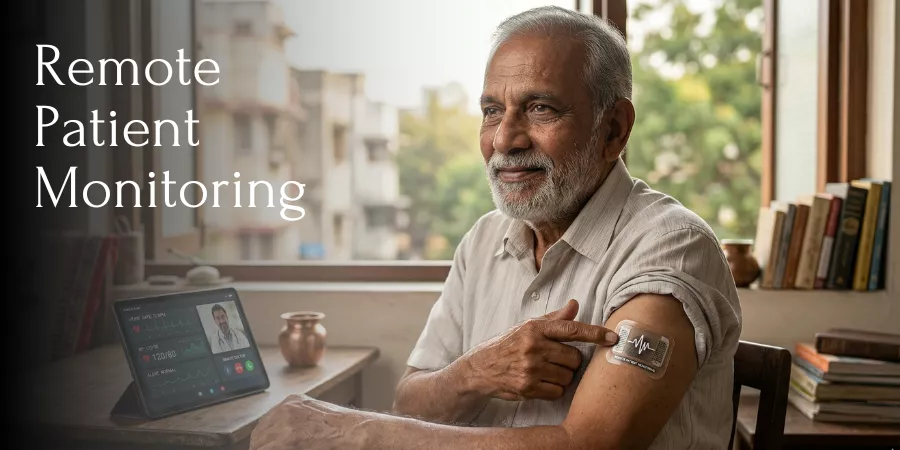
Remote patient monitoring (RPM) is a healthcare method that lets doctors track your health from home using connected devices. You wear or use a device, like a blood pressure cuff or glucose meter, and it sends your health data directly to your care team. This means fewer clinic visits, earlier detection of problems, and better day-to-day health management.
5 Things to Know Right Now:
- RPM lets your doctor monitor your vitals without you leaving home.
- It uses simple devices like wearables, BP monitors, and glucose meters.
- Most Medicare and private insurance plans now cover RPM.
- It can reduce hospital readmissions by up to 25% for chronic patients.
- Over 94% of patients enrolled in RPM programs report satisfaction
Managing Your Health Shouldn’t Mean Living in a Waiting Room
Picture this: You’re managing diabetes, and instead of driving 40 minutes to your doctor’s office every month, your glucose meter sends your readings directly to your care team. If something looks off, they call you before it becomes a crisis.
That’s remote patient monitoring in real life. And for millions of Americans, it’s already changing how healthcare works.
Remote patient monitoring, or RPM, is one of the fastest-growing areas in healthcare today. By 2026, over 70 million US patients are expected to use some form of RPM technology. Whether you have a chronic condition, recently had surgery, or simply want to stay on top of your heart health, this guide tells you everything you need to know in plain language.
What is Remote Patient Monitoring?
Remote patient monitoring is a type of healthcare where doctors and nurses track your health data outside of a traditional hospital or clinic setting. You use a connected device at home, like a blood pressure cuff, glucose meter, or wearable, and the data goes directly to your healthcare provider.
Your care team reviews that data in real time or daily. If anything looks unusual, they reach out. You stay informed. And your doctor stays in the loop, without either of you needing to schedule a visit.
Think of it as having a health check happening in the background, every single day.
Remote patient monitoring in healthcare is part of a broader shift toward proactive care, catching problems early instead of reacting after something goes wrong.
How Does Remote Patient Monitoring Work?
The process is simpler than it sounds. Here’s what it typically looks like:
- Your doctor enrolls you in an RPM program and recommends a specific device.
- You receive the device, either purchased, rented, or covered by insurance.
- You use it at home on a schedule (daily readings, for example).
- The device transmits data via Bluetooth or cellular to a secure health platform.
- Your care team reviews the readings and contacts you if anything needs attention.
Remote patient monitoring devices range from simple clip-on pulse oximeters to advanced smartwatches. Many remote patient monitoring apps on your smartphone can pull in this data and create easy-to-read summaries for both you and your provider.
The whole system runs in the background. You don’t need to be tech-savvy. Most devices are designed to work right out of the box.
Who Needs Remote Patient Monitoring?
RPM for chronic diseases is where this technology shines most. But it’s not only for people with long-term illnesses.
Patients With Chronic Conditions
If you live with diabetes, heart disease, hypertension, COPD, or kidney disease, RPM gives your doctor a continuous window into how your body is doing, not just how it was doing on the day you visited three months ago.
Elderly Patients
Older adults often deal with multiple conditions at once. Frequent in-person visits can be physically exhausting. Remote patient monitoring makes it easier to stay safely at home while still getting consistent medical oversight.
Post-Surgery Recovery
After surgery, the risk of complications doesn’t vanish the moment you leave the hospital. RPM lets your surgical team watch for warning signs, like elevated heart rate or unusual blood pressure, during your recovery at home.
Mental Health and Medication Adherence
Some RPM programs also track behavioral health markers, medication reminders, and mood check-ins, helping patients stay consistent with their treatment plans.
RPM Benefits: Why Patients Choose Remote Monitoring
The evidence behind RPM benefits is real and growing. Here’s what patients and providers consistently report:
- Fewer hospitalizations: RPM has the potential to decrease the number of hospitalizations among chronic patients by up to 25 percent, research published in healthcare journals indicates.
- Earlier detection: Issues are identified before they become an emergency. An unusual heart rhythm or spike in blood pressure is detected the same day.
- Better doctor communication: Your provider does not see a snapshot of your data on a single visit.
- More control for patients: You are able to view your own trends and ask questions more effectively, and feel more involved in your care.
- Cost-savings: Reduced out-of-pocket costs by fewer ER visits and hospitalizations.
- High satisfaction: More than 94 percent of patients in RPM programs are satisfied with their care experience.
For rural patients especially, telehealth monitoring reduces the burden of long drives and time away from work. Remote patient monitoring in healthcare is one of the clearest examples of technology genuinely improving quality of life.
What are the Risks or Limitations?
RPM is not without its challenges. Being aware of them helps you make a better decision.
- Data Privacy: Your health statistics are being sent in digitized form. Well-known RPM systems employ robust encryption and are in accordance with the HIPAA requirements. Never enroll with a provider that does not conform to a HIPAA-compliant system.
- Technology Barriers: All patients are not comfortable with machines. Lapse in data may occur due to connectivity problems in the rural regions or outdated devices. Support lines are provided in most of the programs but this can be enquired about initially.
- Alert Fatigue and Anxiety: Other patients are anxious because of paying too much attention to their numbers. Minor variation is expected. An RPM program will help to establish attainable alert parameters and inform you of what to anticipate.
- Over-Reliance on Technology: RPM is not a replacement of your care, it is supplemental to it. In case you are not feeling fine you can call your doctor and see what it displays.
Real-Life Examples of Remote Patient Monitoring
Here’s how remote patient monitoring examples play out in everyday healthcare:
- Diabetes Monitoring: CGMs are devices that monitor blood sugar 24 hours a day. They notify the patient and the doctor when the levels become dangerously low or skyrocket. This live information has caused a drastic decrease in the number of ER visits due to diabetes.
- Arrhythmia and Heart Disease: Wearable cardiac monitors detect abnormal heartbeats not identified by a single EKG. This potentially saves lives of patients with atrial fibrillation or other heart related ailments.
- Blood Pressure Management: The reason is that hypertension is referred to as a silent killer, because it usually has no symptoms, until something serious occurs. An electrical blood pressure measurement transmitted to a care team daily improves the real-time adjustment of medicine by the health care professional, lowering the risk of stroke.
- Post-Surgery Recovery: Patients who have a knee replacement or a cardiac operation put on monitoring patches to monitor their temperature, heart rate, and movement. Where there is any indication of a complication, the care team will step in and prevent a hospital readmission.
Remote Patient Monitoring vs. Telehealth – What’s the Difference?
These two terms get confused often, but they mean different things.
Telehealth is a video or phone appointment with your doctor. You talk, they listen, they advise. It’s a virtual version of an in-person visit.
Remote patient monitoring is continuous, passive data collection happening between visits. There’s no call required. Your devices are silently doing the work.
Many healthcare systems now combine both. You have a monthly telehealth video call with your doctor who has already reviewed two weeks of your RPM data before the appointment. That’s a powerful combination.
What Devices Are Used in Remote Patient Monitoring?
- Remote patient monitoring devices cover a wide range of health needs:
- Blood pressure monitors (wireless cuffs that send readings automatically)
- Pulse oximeters (clip on your finger, track oxygen levels and pulse)
- Continuous glucose monitors (worn on skin, track blood sugar 24/7)
- Cardiac monitors and wearable ECG patches
- Smart scales that track weight changes linked to heart failure
- Spirometers for lung function in COPD patients
- Wearables like certain smartwatches approved for clinical monitoring
Most remote patient monitoring apps tie into these devices and give patients a user-friendly dashboard to see their own trends. Apple Health, Dexcom Clarity, iHealth, and others are commonly used platforms in RPM programs today.
Is RPM Safe for Patients?
Yes, remote patient monitoring is considered safe and effective for most patients when used within a properly managed program. Here’s what the evidence shows:
- Clinical studies consistently show RPM reduces adverse health events in high-risk patients.
- HIPAA-compliant platforms protect your data with the same standards applied to hospital records.
- The American Heart Association and other major health bodies actively endorse RPM as a standard of care for certain conditions.
The key is choosing a program managed by a licensed healthcare provider, not just a wellness app. There’s a difference between a consumer health tracker and a clinical RPM program under physician supervision.
Does Insurance Cover Remote Patient Monitoring?
Coverage has expanded significantly in recent years:
- Medicare covers RPM under specific CPT billing codes (99453, 99454, 99457, 99458). Your doctor bills for device setup, data collection, and monitoring time.
- Medicaid coverage varies by state, check with your state’s Medicaid office.
- Most major private insurers now include some form of RPM coverage, particularly for chronic disease management.
For patients in rural areas, RPM has been a genuine lifeline. The combination of telehealth monitoring and RPM removes the geographic barrier from quality care. The FCC and HHS have both supported expanded broadband and RPM access for rural communities.
Remote Therapeutic Monitoring – A Closely Related Option
Remote therapeutic monitoring (RTM) is a newer category that monitors non-physiological data, things like medication adherence, pain levels, and therapy compliance. While remote patient monitoring focuses on vital signs and physiological data, RTM expands oversight into treatment behaviors.
Patients managing musculoskeletal conditions, respiratory therapies, or behavioral health programs may encounter RTM as part of their care. Medicare began reimbursing RTM services in 2022, signaling strong institutional support for this approach.
The Future of Remote Patient Monitoring
The next five years will see RPM become standard care for dozens of conditions. Key trends include:
- AI-driven analysis: Machine learning algorithms will detect subtle patterns in health data that human reviewers might miss, predicting problems days before symptoms appear.
- IoT integration: Smart home devices will combine with health monitors to give providers context (sleep patterns, activity levels, environmental factors).
- Predictive healthcare: Instead of managing disease, RPM will increasingly be used to prevent it, flagging risk factors before any diagnosis exists.
- Broader insurance coverage: As outcomes data accumulates, more payers will expand RPM reimbursement to a wider range of conditions.
Remote patient monitoring companies like Teladoc Health, Philips, iRhythm, Dexcom, and Biofourmis are investing heavily in next-generation RPM platforms. The global RPM market is expected to exceed $175 billion by 2030.
Remote Patient Monitoring Jobs and Careers
The growth of RPM has created an entirely new segment in healthcare employment. Remote patient monitoring jobs include roles like RPM nurse, clinical monitoring specialist, and health data analyst. These professionals review patient data flagged by RPM systems and coordinate follow-up care.
Remote patient monitoring salary ranges vary by role and location, but clinical RPM nurses in the US typically earn between $60,000 and $90,000 annually. Remote patient monitoring companies are actively hiring, especially as more health systems build out their RPM programs.
Frequently Asked Questions
What is remote patient monitoring?
Remote patient monitoring is a healthcare technology that lets doctors and nurses track your health data, like blood pressure, heart rate, or blood sugar, from outside a clinic. You use a connected device at home, and the data goes directly to your care team for review.
What is the best example of remote patient monitoring?
Continuous glucose monitoring for diabetes is one of the clearest examples. A small sensor worn on the skin tracks blood sugar levels around the clock and shares the data with both the patient and their endocrinologist in real time. It has significantly reduced dangerous blood sugar episodes.
Is RPM safe for patients?
Yes. Remote patient monitoring is safe when used within a physician-managed program. Data is protected under HIPAA regulations, and clinical evidence consistently shows RPM reduces hospitalizations and improves outcomes for patients with chronic conditions.
How does RPM improve health outcomes?
RPM allows care teams to spot trends and abnormalities early, before they become emergencies. Regular data gives doctors better information to adjust medications and treatment plans. Studies show RPM reduces hospitalization rates by up to 25% for high-risk patients.
What devices are used in remote patient monitoring?
Common remote patient monitoring devices include wireless blood pressure monitors, continuous glucose monitors, pulse oximeters, wearable cardiac patches, smart scales, and spirometers. Many connect to smartphone apps that organize your health data in one place.
What’s the difference between RPM and telehealth?
Telehealth is a scheduled video or phone call with your doctor. Remote patient monitoring is passive data collection that happens continuously between appointments. The two are often used together for comprehensive virtual care.
How do remote patient monitoring companies work?
Remote patient monitoring companies build the devices, platforms, and software used to collect and analyze patient health data. They partner with healthcare systems or insurance companies to provide the technology. Examples include Dexcom, iRhythm, Philips, and Biofourmis.
Is there a remote patient monitoring app I can use?
Yes. Many RPM programs come with patient-facing apps that show your health trends, medication reminders, and secure messaging with your care team. The app is usually connected to your monitoring device via Bluetooth. Ask your provider which app their RPM program uses.
What does remote patient monitoring cost?
For patients enrolled through a physician’s office, Medicare covers the setup and monthly monitoring fees under specific billing codes. Private insurers increasingly cover RPM as well. Out-of-pocket costs vary by plan, ask your insurer about your specific coverage before enrolling.
Author’s Opinion
Healthcare has always been reactive, we visit doctors when something goes wrong. Remote patient monitoring quietly flips that model.
When a 68-year-old heart patient in rural Kansas can have her cardiologist reviewing her rhythm data every morning without either of them driving anywhere, that’s not just convenient, it’s a genuinely different kind of care.
The technology is not perfect yet, and privacy concerns deserve honest conversation. But the direction is right. More data, shared sooner, between patients and providers who trust each other, that’s what better outcomes actually look like.
Conclusion
Remote patient monitoring is not a futuristic idea. It is happening right now, in living rooms and bedrooms across the country, quietly helping people manage real health challenges without constant trips to the doctor’s office.
For patients with chronic conditions, the elderly, and anyone recovering from a procedure, RPM offers something that traditional healthcare has always struggled to provide, continuous, personalized attention.
Ask your doctor if remote patient monitoring is right for your situation. For millions of Americans, it already is.
Read also: Do Fitness Trackers Actually Improve Health Outcomes?