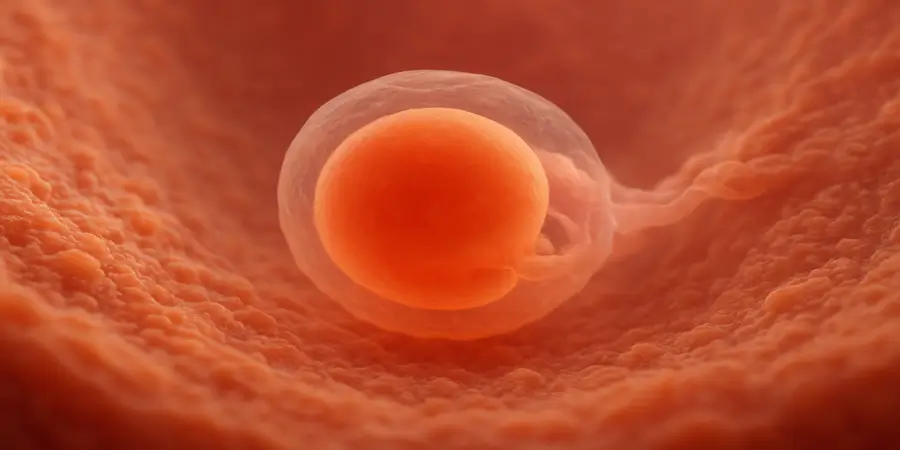
In a breakthrough that could transform fertility treatments, scientists have captured the world’s first real-time 3D video showing how a human embryo implants into the uterus. The discovery may help improve success rates for in vitro fertilization (IVF), which often fail at this crucial stage.
The pioneering study was led by the Institute for Bioengineering of Catalonia (IBEC), using artificial uterus models and embryos donated by Dexeus University Hospital in Barcelona.
A Powerful Process Inside the Womb
Lead researcher Samuel Ojosnegros, from IBEC’s Bioengineering for Reproductive Health Group, explained that the implantation process is far more active and aggressive than previously thought.
“We observed that human embryos burrow deep into the uterus, exerting considerable force during implantation. It’s not a passive process, but a surprisingly invasive one,” Ojosnegros said.
When an embryo successfully implants, it pushes into the uterine lining, fusing with it to begin pregnancy. This explains why many women experience mild cramps or light spotting at this stage.
Until now, implantation had never been visualized, leaving much of this critical stage a mystery to science.
Why Implantation Matters in IVF Success
Implantation is one of the biggest hurdles in achieving pregnancy. According to researchers, implantation failure accounts for up to 60% of miscarriages and is a major factor in infertility.
During this process, the embryo attaches to the inner lining of the uterus, multiplies in cells, and starts developing. If implantation does not occur, the pregnancy cannot progress.
Researcher Amelie Godeau added that the embryo does not act alone.
“It reshapes the uterine lining and responds to external contractions. We believe natural uterine contractions could play a critical role in whether implantation succeeds,” she said.
Key Findings: Uterus Contractions May Help Embryo Implantation
The study highlights that the uterus undergoes spontaneous contractions—typically one to two per minute—during the menstrual cycle. These contractions may guide or assist the embryo in successfully embedding into the uterine wall.
Understanding this interaction between embryo and uterus could help fertility experts refine IVF procedures, possibly leading to higher pregnancy success rates worldwide.
A Step Toward Better Fertility Treatments
This groundbreaking 3D footage provides the clearest picture yet of how pregnancy begins at the cellular level. Fertility specialists hope these insights will lead to new strategies that increase IVF success rates and reduce miscarriages, offering hope to millions of couples struggling with infertility.