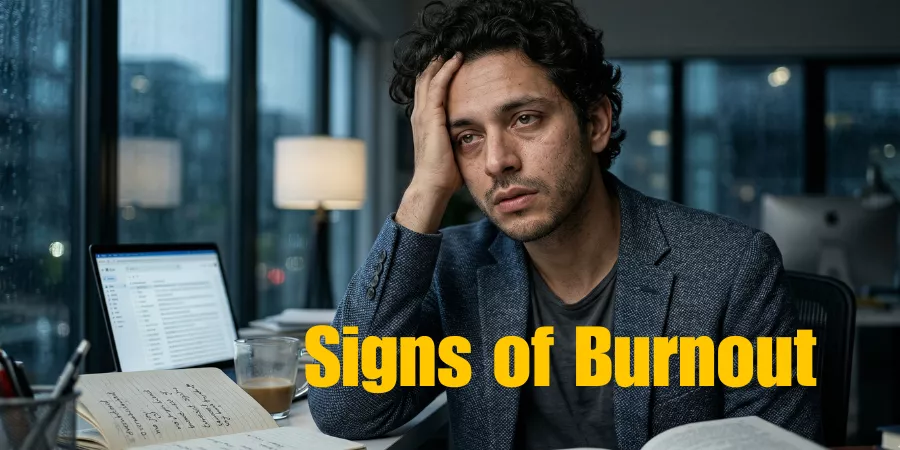
You slept 8 hours but woke up exhausted. Again.
Your coffee is cold on the desk. The to-do list looks the same as yesterday. A simple email feels like a mountain to climb. And somewhere in the back of your mind, a quiet voice is asking, what is wrong with me?
Nothing is wrong with you. You might just be burnt out.
Quick Answer: What Are the Signs of Burnout?
Burnout is a state of chronic exhaustion caused by prolonged, unmanaged stress, most commonly at work. The World Health Organization officially classifies it as an occupational phenomenon. The signs of burnout include:
- Feeling tired even after a full night’s sleep
- Emotional detachment from work or people you care about
- Irritability over small, ordinary things
- A drop in productivity despite working more hours
- Physical symptoms like frequent headaches or falling sick often
If this sounds familiar, keep reading. This article walks you through every sign, what causes it, and how to recover, step by step.
What is Burnout, Exactly?
Burnout is not a weakness. It is not laziness either.
It is what happens when stress builds up for months, sometimes years, without enough recovery. The body and mind eventually stop coping the way they used to.
The WHO defines burnout across three dimensions:
- Exhaustion: You feel completely drained, physically and emotionally. Rest does not seem to help.
- Cynicism or detachment: Work starts to feel meaningless. You distance yourself from colleagues or responsibilities without fully understanding why.
- Reduced effectiveness: Tasks that used to take you an hour now take three. Your confidence takes a hit. You question your own abilities.
These 3 together are the clearest clinical signs of burnout, and they tend to creep in slowly, which is why many people miss them until the situation becomes serious.
What are the First Signs of Burnout?
Most people notice burnout after it has already settled in. The early warning signs are quieter.
Emotional signs of burnout:
- You feel a low-level dread before starting work each morning.
- Small frustrations feel disproportionately annoying, a slow internet connection, a mildly worded message from a colleague.
- You struggle to feel excited about things that used to motivate you.
- Emotional exhaustion symptoms include feeling numb or disconnected, not necessarily sad.
- You find yourself snapping at people and then feeling guilty about it.
Physical signs of burnout:
- Persistent fatigue that does not go away on weekends.
- Sleep disturbances, either sleeping too much or lying awake for hours despite feeling exhausted.
- Frequent colds or infections (a sign of weakened immunity under stress).
- Appetite changes, skipping meals, stress eating, or losing interest in food altogether
- Headaches, tight shoulders, or vague physical ailments that have no obvious medical cause.
Behavioral signs of burnout:
- Procrastinating on tasks you normally handle easily
- Withdrawing from colleagues, friends, or family
- Using screens, scrolling, alcohol, or food to decompress, more than usual
- Calling in sick not because of illness but because you simply cannot face the day
- Losing the ability to switch off after work hours
These are workplace burnout signs that most people either dismiss or push through. The problem is that pushing through without recovery makes it worse, not better.
How Do I Know If I’m Burnt Out or Just Tired?
This is one of the most common questions people ask, and it is a fair one.
Normal tiredness goes away. You sleep, you rest, you recharge, and the next morning feels lighter.
Signs of burnout do not work that way. The exhaustion persists. The detachment stays. Even a two-week holiday might leave you feeling only slightly better, and within days of returning to work, the heaviness comes back.
Simple comparison:
| Normal Tiredness | Burnout | |
| After rest | You feel better | You still feel depleted |
| Cause | Temporary overwork | Prolonged, chronic stress |
| Mood | Generally okay | Detached, irritable, empty |
| Work performance | Temporarily dips | Consistently declining |
| Physical symptoms | Occasional | Persistent – fatigue, physical ailments, weakened immunity |
| Recovery time | Days | Weeks to months |
How do you tell if you are burnt out? Ask yourself this: Has the exhaustion been going on for more than a few weeks? Does rest not seem to help? Do you feel disconnected from work or your own life?
If yes, the signs of burnout are likely at play.
What Causes Burnout?
Burnout rarely comes from a single bad week. It builds slowly from conditions that drain without replenishing.
Common causes:
- Work overload: Too many responsibilities, not enough time or support.
- Lack of control: No say in decisions, micromanagement, unclear expectations.
- Poor work-life balance: Being always available, never fully switching off.
- Emotional pressure: Caring professions, conflict-heavy environments, high-stakes roles.
- Feeling unrecognized: Putting in effort that goes unnoticed or unrewarded for long periods.
- Values mismatch: Doing work that feels meaningless or conflicts with your personal values.
Signs of burnout at work are especially common in high-demand industries. It is believed that burnout prevalence in Southeast Asia is above 60, with health care professionals reporting prevalence above 50 due to chronic understaffing, emotional labor, and lack of autonomy.
Signs of burnout in students and signs of burnout from studying will usually have a similar pattern, there is always constant pressure, no obvious end visible and gradual loss of motivation which gets confused with laziness.
Quick Self-Check: Are You Experiencing Signs of Burnout?
Answer yes or no honestly.
- Do you feel tired even after a full night’s sleep?
- Do small tasks feel overwhelmingly difficult?
- Have you lost interest in work you used to find meaningful?
- Do you feel emotionally flat or disconnected from people around you?
- Are you getting sick more often than usual?
- Do you dread starting your workday most mornings?
- Have you noticed appetite changes or sleep disturbances recently?
- Do you feel like nothing you do is ever enough?
- Have you been more irritable or short-tempered lately?
- Do you feel like you are just going through the motions?
Results:
- 1-3 yes answers: Early warning signs. Pay attention.
- 4-6 yes answers: Moderate burnout symptoms. Time to make changes.
- 7 or more yes answers: Significant signs of burnout. Consider professional support.
Signs of Burnout vs Depression – What is the Difference?
This matters because the two can look similar but need different approaches.
Signs of burnout are typically tied to a specific context, usually work, studying, caregiving, or a role that has become overwhelming. Remove or change that context, and people often start to recover.
Signs of burnout vs depression: Depression is broader. It affects all areas of life regardless of the environment. It often includes persistent hopelessness, loss of interest in everything, not just work, and sometimes thoughts of self-harm.
Burnout can develop into depression if left untreated. If you are unsure which you are dealing with, speaking to a mental health professional is always the right step.
What to Do If You are Experiencing Signs of Burnout
Recovery from burnout is real. It is not quick, but it is absolutely possible.
Short-Term Relief (This Week)
- Take one genuine break today, no phone, no productivity
- Say no to one non-essential commitment
- Sleep at your regular time, even if you do not feel tired
- Talk to one person you trust about how you have been feeling
- Do one thing that has nothing to do with work or obligations
Medium-Term Recovery (Next 4-8 Weeks)
How do I recover from burnout? Start here:
- Identify the specific source – is it workload, relationships, lack of meaning, or lack of control?
- Set one firm boundary at work – a time you stop checking emails, a meeting you decline.
- Rebuild one physical habit – even a 20-minute walk daily makes a measurable difference.
- Reduce decisions where possible – decision fatigue accelerates burnout.
- Consider speaking to a therapist or counselor, especially if sleep disturbances and appetite changes persist.
These are core burnout recovery tips that consistently show results across both clinical research and real-world experience.
Long-Term Prevention (Ongoing)
Burnout recovery tips for the long run are less about surviving and more about designing a life with actual recovery built in:
- Schedule recovery time the way you schedule meetings
- Regularly review your workload and push back when it becomes unsustainable.
- Build a support system at work, isolation accelerates burnout
- Address the root cause, not just the symptoms
- Revisit whether your current role still aligns with your values
How to recover from burnout is not a one-time fix. It is an ongoing practice of paying attention to your own limits.
A Real Example: What Burnout Looks Like in Real Life
Priya was a project manager at a mid-size tech firm. She had always been the reliable one, the person who stayed late, answered messages on weekends, and volunteered for extra projects.
Over eighteen months, something shifted. She started waking up already tired. She snapped at her husband over small things. At work, she missed deadlines she would have laughed at missing before. She assumed she was just being lazy.
She was not lazy. She was showing every classic sign of burnout at work, persistent fatigue, physical ailments including recurring tension headaches, emotional detachment, and a sharp drop in effectiveness.
When she finally took two weeks off, the first week felt almost worse, her body was finally allowed to crash. By week two, the fog began to lift. She returned with clearer boundaries, a reduced workload she had negotiated with her manager, and a standing appointment with a therapist every fortnight.
Six months later, she describes it as the most important decision she made in her career.
Signs you are recovering from burnout often look like this: tasks start feeling possible again, sleep improves, and you notice small moments of enjoyment returning, at first rarely, then more often.
When to Seek Professional Help
Some signs of burnout cross into territory that needs proper support:
- You are experiencing thoughts of self-harm or hopelessness
- Burnout symptoms have lasted more than two to three months without improvement
- You are using substances to cope
- Sleep disturbances and appetite changes are significantly affecting your health
- You feel completely unable to function at work or home
A GP, psychologist, or workplace counselor can help. This is not failure, it is exactly what these professionals are trained for.
Author’s Note:
Burnout sneaks up on you quietly. One day you are managing, the next you are just surviving. I have spoken to enough people, and honestly experienced enough myself, to know that the tiredness burnout brings feels completely different from ordinary exhaustion. It sits in your bones.
What strikes me most is how many people blame themselves for it. They call themselves lazy or weak. But burnout is almost always the result of caring too much for too long without enough support. The bravest thing you can do when you recognise these signs is slow down and ask for help. Asking for help is not a weakness.
Frequently Asked Questions
Can burnout go away on its own? Mild burnout can ease with rest and lifestyle changes. But if the root cause, usually the work environment or chronic overload, does not change, symptoms tend to return. Most people need both rest and structural changes to fully recover.
How long does burnout last? It varies. With active recovery, many people notice improvement within weeks to months. Without any intervention, burnout can persist for years. Early action makes a significant difference.
What are the five symptoms of burnout? The five most commonly reported symptoms are: persistent fatigue, emotional detachment, reduced productivity, physical ailments like headaches or frequent illness, and cynicism or loss of motivation.
Is burnout the same as depression? They can overlap but they are different conditions. Burnout is typically context-specific, usually tied to work or a demanding role. Depression affects all areas of life and often requires clinical treatment. Burnout that goes untreated can develop into depression over time.
Can you work while recovering from burnout? Yes, in many cases – but it usually requires reducing workload, setting clear boundaries, and addressing what caused the burnout in the first place. Working through burnout without changes often makes the recovery longer.
What is the 42% rule for burnout? The 42% rule refers to findings suggesting that around 42% of workers globally report some form of burnout symptoms in a given year. It is often cited to highlight how widespread the issue is, rather than as a diagnostic threshold.
Are signs of burnout in women different from signs of burnout in men? The core signs of burnout are similar across genders, but research suggests women are more likely to internalize burnout as personal failure, while men are more likely to externalize it through irritability or withdrawal. Signs of burnout in women often include emotional exhaustion symptoms like tearfulness or feeling like they are never doing enough. Signs of burnout in men are more often masked by stoicism or increased working hours.
What about signs of burnout in sports or physical activity? Signs of burnout in sports include persistent physical fatigue despite adequate rest, loss of motivation to train, increased injury frequency, irritability, and a drop in performance. Athletes often experience weakened immunity and sleep disturbances as early physical signals.