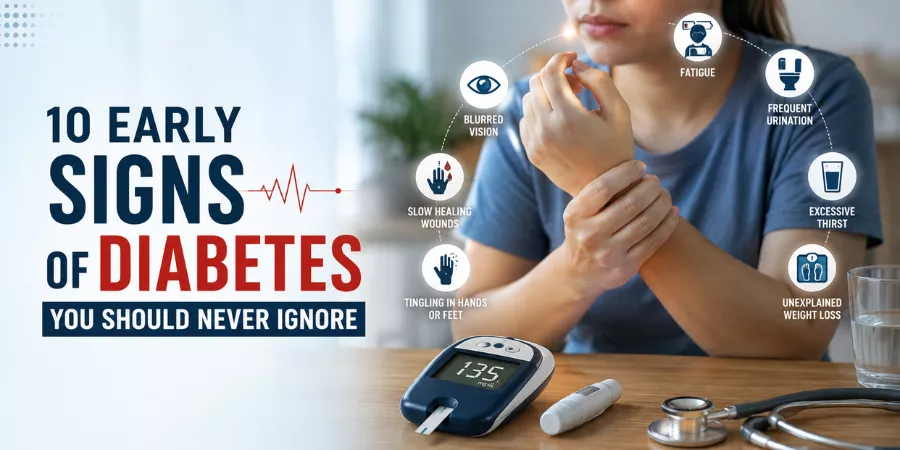
The 10 common warning signs include:
- frequent urination
- excessive thirst
- increased hunger
- unexplained weight loss
- fatigue, blurred vision
- slow-healing wounds
- frequent infections
- tingling or numbness
- certain skin changes.
Symptoms themselves don’t indicate diabetes. Diagnosis involves blood tests and there is no rule that states that everyone with diabetes would show symptoms – for instance, people with type 2 or prediabetes are quite often without any sign of the disease.
To further understand these in detail, let us keep on reading.
Diabetes can come on gradually over time, making initial changes very difficult to notice. In fact, according to the International Diabetes Federation, an estimated 42.8% of adults living with diabetes globally, totaling over 250 million people, are completely unaware they have the condition.
Some early symptoms might not be obvious at all and can easily be mistaken for everyday issues like high stress, normal aging, or temporary lifestyle fatigue. Because these warning signs are so subtle, people often pay very little attention to them and delay consulting a medical professional. Ultimately, understanding and identifying these early indications of diabetes is crucial, as catching the condition early can truly save a person’s life in the future.
Understanding what to watch for is especially important because diabetes does not always cause obvious symptoms in the beginning but if left untreated then diabetes can affect the heart, kidneys, eyes, nerves, and overall energy levels. Some people may feel generally “off” without realizing that their body is struggling to regulate glucose levels. This is why awareness, routine checkups, and listening to your body are essential parts of protecting your long-term health.
This article covers 10 early symptoms of this disease which indicate changes of sugar levels in your blood. Of course, the presence of these symptoms may not mean that you have the diabetes but their appearance should still make you think in particular if the symptoms linger, become more severe, or multiple symptoms are present. Always consult a healthcare professional for proper diagnosis and guidance.
What are the First Warning Signs of Diabetes?
1. Frequent Urination: Especially at Night
When blood sugar rises above a certain threshold, the kidneys work overtime trying to filter and flush out the excess glucose. The result is more urine than usual, and a pattern of waking up in the middle of the night to use the bathroom.
Nighttime urination on its own has plenty of explanations. But combined with other early signs of diabetes, it is worth investigating. Most adults urinate four to seven times in 24 hours. Consistently going more than that, particularly at night, is a signal the body is trying to tell you something.
| What to Do | What Not to Do |
| Track how many times you urinate daily for one week | Do not assume it is just a bladder issue without checking blood sugar |
| Get a fasting blood glucose or HbA1c test | Do not reduce fluid intake to stop urination, this can cause dehydration |
| Mention nighttime urination patterns to your doctor | Do not self-diagnose based on frequency alone |
2. Excessive Thirst
This follows directly from the first point. Frequent urination causes fluid loss. The body responds by sending thirst signals to try to compensate. The problem is that the cycle does not stop, more drinking leads to more urination, which leads to more thirst.
This kind of persistent, hard-to-quench thirst is one of the most recognisable early signs of diabetes symptoms, and one people most often explain away as not drinking enough water.
| What to Do | What Not to Do |
| Note whether thirst is constant and unquenched despite drinking normally | Do not dismiss it as a weather or hydration issue if it persists for more than a week |
| Pair this observation with your urination pattern before seeing a doctor | Do not replace water with sugary drinks or juice to satisfy thirst, this raises blood sugar further |
| Get blood sugar checked if both thirst and urination are elevated together | Do not wait months hoping it resolves on its own |
3. Increased Hunger
You can feel hungry constantly, even right after eating, and still have elevated blood sugar.
The reason is that when insulin is not working properly, cells cannot absorb glucose from the bloodstream effectively. The cells are starving even though the blood sugar is high. The body interprets this as hunger and keeps sending the signal, regardless of how much food went in.
| What to Do | What Not to Do |
| Notice whether hunger appears shortly after a full meal, that pattern is worth flagging | Do not respond to persistent hunger by eating more refined carbohydrates or sugar-heavy foods |
| Keep a simple food and hunger log for a few days before your doctor visit | Do not assume it is just stress or a fast metabolism |
| Mention it alongside other diabetes symptoms, individually each is weak evidence, together they matter | Do not ignore it if it is accompanied by fatigue or unexplained weight changes |
4. Unexplained Weight Loss
Losing weight without trying sounds appealing until you understand what is actually happening. When the body cannot use glucose for energy, it starts breaking down fat and muscle instead. The result is weight loss, sometimes rapid, that has nothing to do with diet or exercise.
This is particularly associated with type 1 diabetes, where insulin production has essentially stopped. In early signs of diabetes type 2, weight loss tends to be more gradual and therefore easier to overlook.
| What to Do | What Not to Do |
| Take note if you have lost more than 5% of your body weight over a few weeks without intentional changes | Do not celebrate unexplained weight loss, it is a symptom, not a result |
| See a doctor promptly if weight loss is rapid and accompanied by thirst or fatigue | Do not attribute it to a change in routine without ruling out a medical cause |
| Ask your doctor specifically about blood sugar and thyroid testing | Do not wait to see if it continues, rapid weight loss warrants prompt evaluation |
5. Persistent Fatigue or Weakness
Fatigue is one of those symptoms that gets attributed to everything, work, stress, poor sleep, too much screen time. But the fatigue that comes with uncontrolled blood sugar has a specific quality. It is not tiredness that sleep fixes.
When glucose cannot enter cells properly, the body literally does not have the fuel it needs. Everything feels harder. Concentration suffers. Energy does not return after rest the way it normally would.
| What to Do | What Not to Do |
| Pay attention to whether fatigue is consistent throughout the day rather than occasional | Do not assume it is burnout or poor sleep if it persists longer than two weeks with no obvious cause |
| Mention the quality of fatigue to your doctor, persistent, unrelieved exhaustion is clinically different from tiredness | Do not increase caffeine intake to compensate without investigating the root cause |
| Ask for blood sugar, thyroid, and iron testing together, fatigue has multiple causes worth ruling out | Do not ignore fatigue that comes alongside any other early signs of diabetes symptoms |
6. Blurred or Fluctuating Vision
Elevated blood sugar affects the lens of the eye. The lens is sensitive to fluid changes, and when blood glucose rises, it can cause the lens to swell temporarily, changing how it focuses light. Vision becomes blurry or distorted, and can shift back toward normal when blood sugar levels change.
This fluctuation is the telling detail. Blurred vision that comes and goes with no other obvious cause is one of the early signs of diabetes in women and men that tends to get dismissed as eye strain or the need for new glasses.
| What to Do | What Not to Do |
| Note whether the blurring fluctuates, better at some times of day, worse at others | Do not rush to buy new glasses or contact lenses before checking blood sugar |
| See both a doctor and an optometrist, eye and blood sugar tests complement each other | Do not ignore vision changes that come and go, especially alongside other diabetes symptoms |
| Tell your optometrist specifically that you want the retina checked, not just a refraction test | Do not assume screen time or eye strain explains it if you are also experiencing thirst or fatigue |
7. Slow-Healing Cuts or Wounds
A small cut that takes weeks to heal instead of days is worth paying attention to. High blood sugar impairs circulation and nerve function, both of which the body needs to repair damaged tissue efficiently. White blood cells, which fight infection and assist healing, also function less effectively in a high-glucose environment.
Early signs of diabetes in feet and early signs of diabetes in legs are often first noticed as wounds or sores that simply will not close properly, particularly in people who have had elevated blood sugar for a while without realising it.
| What to Do | What Not to Do |
| Keep track of how long minor cuts or sores take to heal, a clear record helps your doctor assess the pattern | Do not treat a slow-healing foot wound at home for weeks without seeing a doctor |
| Check feet daily for sores, particularly if you have other diabetes risk factors | Do not wear tight footwear if you already have a wound on your foot or leg |
| See a doctor if any wound has not improved meaningfully after two weeks | Do not ignore redness, warmth, or swelling around a slow-healing wound, these signal infection |
8. Frequent Infections
Skin infections. Urinary tract infections. Yeast infections that keep coming back. The NIDDK specifically lists frequent infections among the common diabetes symptoms, and for good reason, glucose creates a hospitable environment for bacteria and fungi.
Women experiencing recurring vaginal yeast infections or urinary infections without an obvious explanation are often later found to have elevated blood sugar. This is one of the early signs of diabetes in women that gets treated repeatedly without anyone connecting it to blood sugar levels.
| What to Do | What Not to Do |
| Tell your doctor if you have had two or more UTIs, yeast infections, or skin infections within a few months | Do not keep treating recurring infections without asking your doctor to check blood sugar |
| Ask specifically: “Could my blood sugar be contributing to this?,” many doctors will not connect the dots unless prompted | Do not self-treat repeated yeast infections with over-the-counter products indefinitely |
| Request a blood glucose test alongside any repeat infection consultation | Do not assume recurring infections are just bad luck, a pattern this clear warrants investigation |
9. Tingling, Burning, or Numbness in Hands and Feet
Nerve damage, diabetic neuropathy, is typically associated with long-standing diabetes. But tingling and numbness can begin earlier than most people realise, while blood sugar has been elevated for months or years without a diagnosis.
The peripheral nerves, particularly in the hands and feet, are among the first affected. A persistent pins-and-needles sensation, burning, or patches of numbness in the extremities is a reason to get blood sugar checked, not to wait and see.
This is one of the more common early signs of diabetes legs presentations, showing up as an unusual heaviness or tingling that people assume is a circulation issue.
| What to Do | What Not to Do |
| Describe the sensation precisely to your doctor, tingling, burning, numbness, or shooting pain each point toward different causes | Do not dismiss it as pins and needles from sitting awkwardly if it is persistent or bilateral |
| Ask for blood sugar testing alongside B12 and thyroid checks, all can cause similar nerve symptoms | Do not wait to report it if you already have other diabetes symptoms — nerve damage progresses |
| Inspect feet regularly for areas of numbness where you might not feel a cut or wound forming | Do not massage or apply heat to numb areas without medical guidance — sensation loss means injury risk |
10. Dark, Velvety Skin Patches (Acanthosis Nigricans)
Dark, thickened patches of skin appearing around the neck, armpits, or groin are often overlooked because they do not look like a classic illness symptom. This condition is called acanthosis nigricans, and it is more accurately a sign of insulin resistance than of diabetes itself, though the two are closely connected.
Acanthosis nigricans signals that the body is producing excess insulin to try to compensate for resistance, which can precede type 2 diabetes by years.
| What to Do | What Not to Do |
| Point it out to your doctor, particularly if it appears in skin folds around the neck or underarms | Do not try to scrub or bleach the patches, they are not caused by poor hygiene |
| Ask for an insulin resistance panel and fasting blood glucose test | Do not assume it is cosmetic, it is a metabolic signal worth investigating |
| Use this finding as a reason to review lifestyle factors: weight, diet, and activity levels matter here | Do not wait for other diabetes symptoms to appear before acting, this patch can precede them by years |
Can You Have Diabetes Without Any Symptoms?
Yes. In type 2 diabetes, hyperglycaemia develops gradually, and many individuals do not notice symptoms such as dehydration or unintentional weight loss straight away, according to the ADA’s Standards of Care in Diabetes 2025.
Prediabetes almost never produces noticeable symptoms. The blood sugar is elevated enough to cause long-term damage but not high enough to trigger the classic warning signs most people associate with diabetes. Over 115 million Americans age 18 and older are living with prediabetes, according to the American Diabetes Association (2026). The majority of them do not know it.
This is the argument for routine blood testing, especially for anyone with risk factors, regardless of how they feel day to day.
Are These Symptoms Always Caused by Diabetes?
No. Frequent urination can indicate a bladder condition or a prostate issue. Fatigue can come from anaemia, thyroid problems, or sleep disorders. Blurred vision has dozens of causes. Tingling in the hands and feet can result from vitamin deficiencies, particularly B12.
A single symptom from this list is not a reason to panic. A cluster of them, particularly three or more, is a reason to get a blood test. That is different from assuming the worst from one unusual night.
The clinical principle is straightforward: symptoms can raise reasonable suspicion. They cannot make a diagnosis. Only blood testing can.
What is the Difference Between Diabetes and Prediabetes Symptoms?
| Prediabetes | Diabetes | |
| Symptoms | Usually none | May be present or absent |
| HbA1c | 5.7%–6.4% | 6.5% or higher |
| Fasting glucose | 100–125 mg/dL | 126 mg/dL or higher |
| 2-hour OGTT | 140–199 mg/dL | 200 mg/dL or higher |
| Diagnosis method | Blood test only | Blood test only |
| Reversible | Often, with lifestyle changes | Manageable; remission possible in some cases |
Prediabetes does not reliably produce 10 identifiable warning signs. The NIDDK is clear on this. Treating prediabetes as though it has a visible symptom profile misleads people into thinking they would know if something were wrong. Often, they would not.
What Blood Tests Diagnose Diabetes?
HbA1c (Glycated Haemoglobin) Test
Measures average blood sugar over approximately three months. No fasting required. A result of 6.5% or above on two separate occasions indicates diabetes. This is currently the most commonly used screening and diagnostic tool.
Fasting Plasma Glucose Test
Requires eight hours of fasting before the blood draw. A fasting glucose reading of 126 mg/dL or above on two separate occasions confirms diabetes. A result of 100–125 mg/dL indicates prediabetes.
Oral Glucose Tolerance Test (OGTT)
Used particularly during pregnancy to screen for gestational diabetes, and in cases where other results are borderline. The patient drinks a glucose solution and blood is drawn two hours later. A result of 200 mg/dL or above indicates diabetes.
Random Plasma Glucose Test
Can be taken at any time without fasting. A result of 200 mg/dL or above alongside diabetes symptoms is sufficient for a diagnosis on its own, according to the ADA’s Standards of Care 2026.
What are the Blood Sugar Levels for Normal, Prediabetes, and Diabetes?
| Test | Normal | Prediabetes | Diabetes |
| HbA1c | Below 5.7% | 5.7%–6.4% | 6.5% or higher |
| Fasting glucose | Below 100 mg/dL | 100–125 mg/dL | 126 mg/dL or higher |
| 2-hour OGTT | Below 140 mg/dL | 140–199 mg/dL | 200 mg/dL or higher |
| Random glucose | ‒ | ‒ | 200 mg/dL or higher (with symptoms) |
Who Should Get Tested for Diabetes?
Testing is not only for people with symptoms. The ADA recommends screening for anyone with risk factors, including:
- Being overweight or living with obesity
- Family history of diabetes in a parent or sibling
- Physical inactivity
- High blood pressure (130/80 mmHg or above)
- HDL cholesterol below 35 mg/dL or triglycerides above 250 mg/dL
- History of gestational diabetes
- Polycystic ovary syndrome (PCOS), particularly relevant for early signs of diabetes in women.
- Age 35 and above, particularly with any of the above factors
- Previous blood test showing prediabetes
Men carry a slightly higher burden of undiagnosed diabetes than women, with 4.9% of men having undiagnosed diabetes compared to 3.5% of women, according to the National Center for Health Statistics (2024). For early signs of diabetes in men, particularly 4 early signs of diabetes in men over 50, frequent urination, fatigue, slow wound healing, and blurred vision, the combination deserves attention because men are statistically less likely to present for routine screening.
When Should You See a Doctor?
See a doctor soon if:
- Several of the above symptoms are occurring together
- Symptoms have been present for more than two weeks
- You have known risk factors for diabetes
- You are experiencing unexplained weight loss
- Wounds on your feet or legs are taking longer than usual to heal
- You have had two or more episodes of thrush or urinary infection in a short period
Seek urgent medical attention if you experience extreme thirst, very high blood sugar readings, confusion, rapid breathing, or fruity-smelling breath, these can indicate diabetic ketoacidosis, a serious acute complication requiring immediate care.
Can Early Diabetes Be Reversed?
Yes, early-stage Type 2 diabetes and prediabetes can often be reversed or put into remission. Reversal means your blood sugar levels return to a normal, healthy range without needing medication. However, it is not a permanent cure; healthy habits must continue to keep blood sugar stable. Type 1 diabetes cannot be reversed.
- Prediabetes: Blood glucose can return to a normal range with lifestyle intervention, weight loss, increased physical activity, and dietary changes. The NIDDK confirms that the Diabetes Prevention Program demonstrated a 58% reduction in progression from prediabetes to type 2 diabetes with structured lifestyle intervention.
- Type 2 diabetes: Some people achieve remission, meaning blood sugar returns to below diagnostic thresholds without medication, through substantial and sustained weight loss, dietary changes, or bariatric surgery. This is not guaranteed, and it depends significantly on how long the condition has been present and individual health factors.
- Type 1 diabetes: Requires insulin therapy. There is no reversal option currently available.
The honest version: catching elevated blood sugar early creates real options. Waiting until symptoms are severe narrows them considerably.
How Can You Reduce Your Risk of Type 2 Diabetes?
Research predicts that more than 1.3 billion people will have diabetes by 2050, according to The Lancet (2023). Type 2 diabetes is substantially preventable with the right interventions.
- Aim for at least 150 minutes of moderate physical activity per week
- Reduce intake of sugary drinks and ultra-processed foods
- Maintain a healthy body weight, even a 5–7% reduction in body weight reduces risk meaningfully.
- Get adequate sleep, poor sleep is associated with impaired glucose regulation
- Get screened regularly if you have risk factors, even when you feel fine
FAQs About Early Signs of Diabetes
What is the first warning sign of diabetes?
The most commonly reported first warning signs of diabetes are frequent urination and excessive thirst, particularly when they occur together. These arise because elevated blood sugar causes the kidneys to filter harder, increasing urine output and triggering fluid loss. However, some people notice fatigue or blurred vision first. No single symptom is universal.
What are the 10 early warning signs of diabetes?
The 10 early signs of diabetes are: frequent urination, excessive thirst, increased hunger, unexplained weight loss, persistent fatigue, blurred vision, slow-healing wounds, frequent infections, tingling or numbness in the hands or feet, and dark skin patches (acanthosis nigricans). Not everyone with diabetes experiences all 10, and some experience none at all.
Can diabetes start suddenly?
Type 1 diabetes can develop and produce symptoms relatively quickly, sometimes over days or weeks. Type 2 diabetes typically develops gradually over months or years, which is why early signs of diabetes type 2 are often attributed to other causes before a diagnosis is made.
Can you have diabetes without symptoms?
Yes. About 27.6% of US adults with diabetes are undiagnosed, according to the CDC’s National Diabetes Statistics Report (2026). Type 2 diabetes and prediabetes frequently produce no noticeable symptoms.
Can prediabetes cause symptoms?
Prediabetes usually does not cause identifiable symptoms. The NIDDK states clearly that most people with prediabetes have no symptoms, which is why blood testing based on risk factors matters, rather than waiting to feel unwell.
Is excessive thirst always a sign of diabetes?
No. Excessive thirst has many causes including dehydration, hot weather, certain medications, and dry mouth conditions. In the context of diabetes, thirst is typically accompanied by frequent urination and other diabetes symptoms rather than occurring in isolation.
Is frequent urination at night a sign of diabetes?
Nighttime urination, called nocturia, can be one of the early signs of diabetes symptoms, particularly when combined with excessive thirst or daytime urination. On its own, it has many possible causes including bladder conditions, prostate issues, and fluid intake patterns.
Can diabetes cause sudden weight loss?
Yes, particularly in type 1 diabetes, where the body stops producing insulin and begins breaking down fat and muscle for energy. Sudden unexplained weight loss alongside other diabetes symptoms is a reason to seek medical evaluation promptly.
Does diabetes cause blurred vision?
Elevated blood sugar can cause temporary blurring as fluid changes affect the lens of the eye. Vision may fluctuate as blood sugar levels change. Persistent blurred vision, particularly in someone with other early signs of diabetes, warrants an eye examination and a blood sugar check.
What blood sugar level indicates diabetes?
A fasting blood glucose of 126 mg/dL or higher on two separate occasions, an HbA1c of 6.5% or higher, or a random glucose of 200 mg/dL or higher with symptoms, any one of these meets the diagnostic criteria for diabetes, according to the ADA’s Standards of Care in Diabetes 2026.
What is the difference between prediabetes and diabetes?
Prediabetes involves blood glucose above normal but below the diagnostic threshold for diabetes, HbA1c between 5.7% and 6.4%, or fasting glucose between 100 and 125 mg/dL. It typically produces no symptoms. Diabetes is diagnosed when glucose levels cross the thresholds above, and may produce symptoms, or equally may not.
When should I get tested for diabetes?
Get tested if you have risk factors including overweight, family history, physical inactivity, high blood pressure, or age over 35. Early signs of diabetes in women over 60 and early signs of diabetes in children also warrant prompt evaluation. Do not wait for symptoms, many people with diabetes and nearly all people with prediabetes have none.
Conclusion
An estimated 589 million to 830 million people are living with diabetes worldwide, according to the IDF and WHO (2024–2025). A significant portion of them went months or years without knowing.
The early signs of diabetes are real and they are also easy to dismiss one by one. The point of this list is not to turn every tired morning or blurry afternoon into a medical emergency. In fact, it is to give you enough information to recognise a pattern if one is forming, and to understand that a blood test, not a list of symptoms, is what actually tells you what is happening.
If several of these diabetes symptoms are showing up together, get a blood test. That is all. One appointment, one result, and then you know.
This article is for informational purposes only. It does not replace medical advice. If you have concerns about your blood sugar or diabetes symptoms, speak with a qualified healthcare professional.