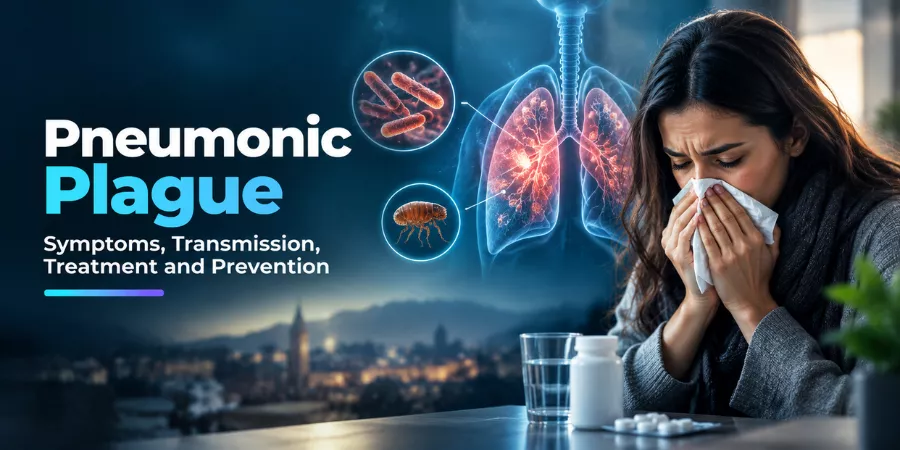
Pneumonic plague is the lung infection caused by Yersinia pestis, the bacterium responsible for plague. It is the most serious form of plague because it can progress rapidly, cause respiratory failure and, unlike bubonic plague, spread directly from person to person through infectious respiratory particles.
Although plague is associated with medieval history, pneumonic plague has not disappeared. Modern cases remain rare, and antibiotics can be effective when treatment begins promptly. The real danger is delay: untreated pneumonic plague is almost always fatal.
Table of Contents
- What is Pneumonic Plague?
- What Are the Pneumonic Plague Symptoms?
- How Does Pneumonic Plague Spread?
- Pneumonic Plague vs Bubonic Plague: What Is the Difference?
- What is the Pneumonic Plague Mortality Rate?
- What is Pneumonic Plague Treatment?
- Pneumonic Plague in History
- How Can Pneumonic Plague Be Prevented?
- When Should You Seek Medical Care?
What is Pneumonic Plague?
Pneumonic plague occurs when Yersinia pestis infects the lungs. It can develop as primary pneumonic plague, when bacteria are inhaled directly from an infected person or animal, or as secondary pneumonic plague, when an existing bubonic or septicemic infection spreads to the lungs.
The distinction is important because pneumonic plague is the only major clinical form of plague capable of sustained person-to-person transmission through respiratory droplets or particles. Close contact with a person or animal with pneumonic plague presents the greatest transmission risk.
The bacterium normally circulates among wild rodents and their fleas. Humans can become infected through infected flea bites, contact with infected animal tissues or fluids, or inhalation of infectious respiratory particles.
What Are the Pneumonic Plague Symptoms?
The pneumonic plague symptoms can appear quickly after infection. According to the CDC, patients may develop fever, headache, weakness, shortness of breath, chest pain and a rapidly developing pneumonia accompanied by cough. The cough may produce watery or bloody mucus.
The incubation period following inhalation can be as short as one day. CDC clinical guidance also notes that primary pneumonic plague can produce fever and breathing difficulty within one to three days after inhalation, with productive cough and bloody or purulent sputum developing in later stages.
Early symptoms may resemble other serious respiratory infections. That makes exposure history particularly important. Recent travel to a plague-endemic region, contact with rodents or sick animals, a known flea exposure, or close contact with someone who has suspected pneumonic plague can help clinicians consider the disease.
A common misconception concerns pneumonic plague skin lesions. Skin changes are not the defining feature of the pneumonic form. Blackened or dying skin tissue is more strongly associated with severe septicemic plague, while bubonic plague is characterized by painful swollen lymph nodes called buboes.
How Does Pneumonic Plague Spread?
The most important route is inhalation of respiratory particles released when an infected person or animal with pneumonic plague coughs. Person-to-person transmission generally requires close contact, particularly when an infected patient is coughing.
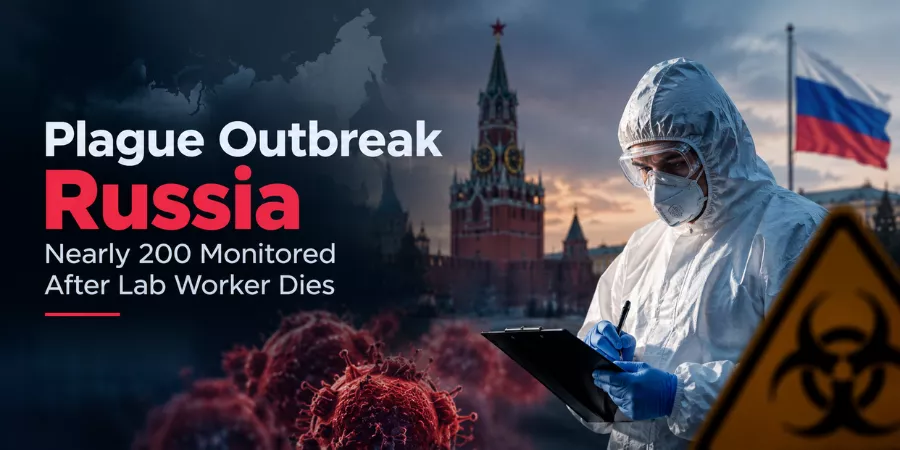
A recent suspected case in Russia has again drawn attention to the disease, after nearly 200 people were placed under medical observation following the death of a laboratory worker from pneumonia of unknown origin. Russian authorities have not confirmed pneumonic plague as the cause.
Read more about the [Russia suspected plague case in Irkutsk] and the public-health measures that followed.
Pneumonic plague can also develop after inhaling infectious particles from an infected animal. Cats are particularly important in modern public-health guidance because they can acquire plague by eating infected rodents and can subsequently expose people through respiratory secretions.
It is different from ordinary seasonal respiratory infections because plague is primarily maintained in animal and flea populations rather than circulating continuously among humans.
Pneumonic Plague vs Bubonic Plague: What is the Difference?
The key difference in pneumonic plague vs bubonic plague is the part of the body primarily affected and the usual route of transmission.
| Feature | Pneumonic plague | Bubonic plague |
| Main site | Lungs | Lymph nodes |
| Typical symptoms | Fever, cough, chest pain, breathing difficulty | Fever, chills, weakness and painful swollen lymph nodes |
| Common route | Inhalation of infectious respiratory particles | Usually infected flea bite |
| Person-to-person spread | Possible through respiratory particles | Rare |
| Main complication | Respiratory failure and sepsis | Spread to bloodstream or lungs |
Bubonic plague can become pneumonic if the bacteria spread to the lungs. This means a person who initially has bubonic disease can eventually develop pneumonic plague, particularly without appropriate treatment.
What is the Pneumonic Plague Mortality Rate?
The pneumonic plague mortality rate depends heavily on whether effective antibiotics are administered and how quickly treatment begins.
The World Health Organization states that plague overall has a case-fatality ratio of 30% to 100% when untreated, while pneumonic and septicemic forms are considered invariably fatal without early treatment.
For pneumonic disease specifically, a CDC-published systematic review found a pooled death rate of 98% among patients who did not receive antimicrobial treatment, compared with 17% among patients who received antimicrobial treatment in the studies reviewed.
These figures explain why the pneumonic plague death rate should not be presented as one fixed number. Historical case series, delays in treatment and differences in diagnosis can substantially change observed outcomes.
The pneumonic plague survival rate can therefore be dramatically better with timely therapy. In a CDC review of published primary pneumonic plague cases, survival was approximately 82% to 83% among patients treated with several major antimicrobial classes, although these historical data should not be interpreted as a prediction for an individual patient.
What is Pneumonic Plague Treatment?
Pneumonic plague treatment requires urgent antimicrobial therapy. CDC guidance says treatment should begin as soon as plague is suspected rather than waiting for confirmatory laboratory results.
In its present form, treatment may include antibiotics like the fluoroquinolones or gentamicin; other antimicrobials will be used according to age, general health and individual circumstances. Hospitalization and supportive measures may be required for complications of the respiratory systems.
Diagnosis commonly involves laboratory testing of clinical specimens. However, treatment should not be delayed while waiting for final confirmation when clinical suspicion is strong.
People who have had close, sustained contact with a patient or animal with pneumonic plague may also require medical evaluation and preventive antibiotics.
Pneumonic Plague in History
The history of pneumonic plague is closely connected with some of the most devastating plague epidemics.
The Black Death of the 14th century caused more than 50 million deaths in Europe, according to WHO. Historical evidence concerning the precise proportions of different clinical forms remains complicated, but pneumonic disease has long been recognized as one manifestation of plague.
The 1924 Los Angeles pneumonic plague outbreak provides a clearer modern example. It was the last major U.S. outbreak involving person-to-person pneumonic transmission in the historical period when plague circulated in American port cities. CDC records describe high fever, chest and back pain and bloody sputum among early patients.
Contemporary public-health records reported 39 plague cases and 33 deaths by November 20, 1924, with most cases classified as pneumonic. The outbreak led to isolation, contact monitoring, rodent control and other public-health measures.
The pneumonic plague in history demonstrates why rapid recognition and public-health intervention remain important even though modern cases are uncommon.
How Can Pneumonic Plague Be Prevented?
Knowing pneumonic plague how to protect yourself begins with reducing exposure to infected animals, fleas and respiratory secretions.
The CDC recommends reducing rodent habitats around homes and recreational areas, avoiding contact with potentially infected animals, wearing gloves when handling or skinning animals, using appropriate insect repellent in areas where flea exposure is possible and maintaining flea control on pets.
People should also avoid close contact with someone suspected of having pneumonic plague until appropriate medical and public-health precautions are in place.
There is currently no commercially available plague vaccine in the United States. Prevention therefore relies heavily on avoiding exposure, controlling fleas and rodents, recognizing illness quickly and obtaining prompt medical care.
When Should You Seek Medical Care?
Pneumonic plague requires emergency medical attention because symptoms can progress rapidly.
Anyone who develops sudden fever, cough, chest pain or breathing difficulty after possible exposure to plague should seek immediate medical evaluation and clearly tell the healthcare provider about relevant travel, animal, flea or close-contact exposure.
The central lesson is upfront: pneumonic plague is dangerous when treatment is delayed, but it is a treatable bacterial infection when recognized and treated promptly. Its history may be associated with catastrophic epidemics, yet modern antibiotics, laboratory diagnosis, contact monitoring and public-health measures have fundamentally changed the outlook for patients who receive timely care.