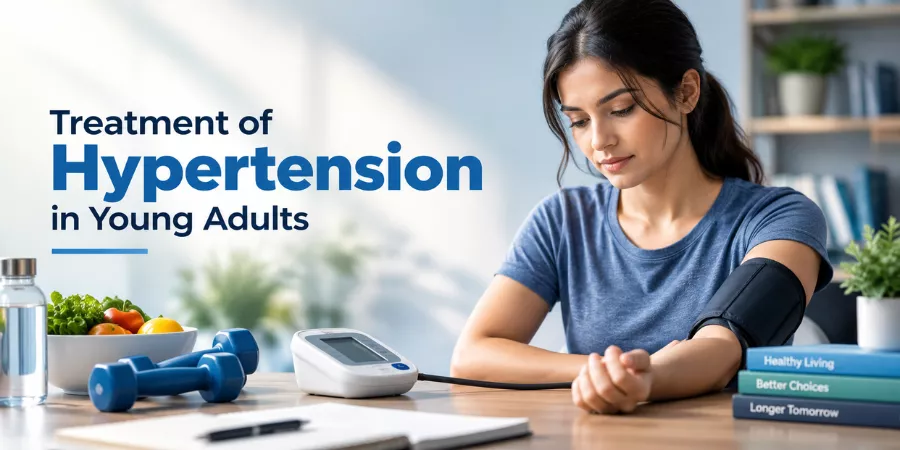
High blood pressure in your 20s or 30s is easy to underestimate. A person may feel completely well, have no history of heart disease and still find that repeated blood-pressure readings are higher than they should be.
That is precisely why hypertension in young adults deserves attention. The problem is not only the number on the monitor. Doctors also need to establish whether the elevation is persistent, look for possible causes and decide whether lifestyle changes, medication or both are appropriate.
The 2024 European Society of Cardiology (ESC) guideline defines young adulthood as ages 18 to 40 and notes that hypertension is becoming more common in this age group. It also highlights a particular concern: secondary hypertension is more frequent among younger adults than in later-onset hypertension.
The approach to treatment therefore starts well before a prescription.
Is One High Blood-Pressure Reading Enough to Diagnose Hypertension?
No. A single high reading does not usually establish that a young adult has persistent hypertension.
Blood pressure changes throughout the day. Exercise, caffeine, stress, illness, poor sleep and the circumstances of a medical appointment can all influence a measurement. That is why repeated measurements and, when appropriate, home or ambulatory monitoring are important.
The ESC recommends out-of-office blood-pressure measurement in young adults because the white-coat effect can occur in this age group. NICE also recommends confirming certain elevated clinic readings with ambulatory or home monitoring.
The terminology can also be confusing because international guidelines do not use exactly the same thresholds.
The 2025 American Heart Association/American College of Cardiology guideline classifies:
| Blood pressure | AHA/ACC 2025 classification |
| Below 120/80 mmHg | Normal |
| 120–129 and below 80 mmHg | Elevated |
| 130–139 or 80–89 mmHg | Stage 1 hypertension |
| 140 or higher or 90 or higher mmHg | Stage 2 hypertension |
The same guideline sets a general treatment goal of below 130/80 mmHg for most adults.
The WHO uses a different clinical definition, illustrating why a blood-pressure result should be interpreted according to the guideline and clinical setting rather than treated as a universal cut-off.
Why Should Hypertension in a Young Adult Be Investigated Differently?
Because high blood pressure at a young age can sometimes have an identifiable cause. High blood pressure in young adults can also present differently from hypertension diagnosed later in life, making confirmation, risk assessment and evaluation for underlying causes particularly important.
Primary, or essential, hypertension remains common. Genetics, excess body weight, high sodium intake, physical inactivity, alcohol, sleep disorders and other lifestyle or environmental factors can contribute.
But younger age raises the possibility of secondary hypertension, high blood pressure caused by another condition, medicine or substance.
The ESC estimates that secondary hypertension accounts for around 15%–30% of hypertension in young adults in some referral-centre studies. Possible causes include primary aldosteronism, kidney disease, certain medicines, hormonal disorders, recreational substances and some supplements or energy drinks.
NICE specifically recommends considering specialist evaluation for secondary causes in adults under 40 with hypertension.
This does not mean that every young adult with high blood pressure needs an extensive battery of tests. The investigation depends on the severity and pattern of hypertension, medical history, examination findings and other risk factors.
But dismissing persistent hypertension as something that simply comes with stress or a busy lifestyle can mean overlooking a treatable cause.
When Does Treatment of Hypertension Require Medication?
There is no single medication threshold that applies identically to every young adult worldwide.
The 2025 AHA/ACC guideline recommends medication alongside lifestyle measures for adults with an average blood pressure of 140/90 mmHg or higher. It also recommends medication for selected adults with an average of at least 130/80 mmHg when they have cardiovascular disease, previous stroke, diabetes, chronic kidney disease or an elevated 10-year cardiovascular risk. For lower-risk adults with blood pressure remaining at or above 130/80 after three to six months of lifestyle changes, medication is recommended.
The situation is more complicated in younger adults because conventional 10-year cardiovascular-risk calculations can produce low estimates simply because of age.
The ESC notes that its standard risk algorithm is not validated for people under 40 and that very young adults can be difficult to classify using short-term risk alone.
NICE makes a related point: 10-year cardiovascular risk can underestimate a person’s lifetime probability of developing cardiovascular disease. For adults under 40 with hypertension, NICE recommends considering a more detailed assessment of the long-term balance between treatment benefits and risks.
That is one of the most important differences between treating hypertension at 28 and treating it at 68. A young person may have a low immediate risk while still facing many years of exposure to elevated blood pressure.
What Medicines are Normally Used?
Treatment of hypertension commonly relies on a small number of established drug classes.
The major first-line options include:
- ACE inhibitors, which help relax blood vessels by reducing the effects of angiotensin.
- Angiotensin II receptor blockers (ARBs), which block the action of angiotensin II.
- Calcium-channel blockers, which relax blood vessels.
- Thiazide or thiazide-like diuretics, which help the kidneys remove sodium and water.
WHO guidance supports these major classes for pharmacological treatment of hypertension and includes recommendations on when to use one medicine, two medicines or a single-pill combination.
The choice depends on the person’s other medical conditions, kidney function, potential side effects, interactions and pregnancy considerations.
The 2025 AHA/ACC guideline recommends two first-line medicines from different classes, preferably in a single fixed-dose combination, for adults with stage 2 hypertension.
Medication should never be selected, stopped or changed solely on the basis of information in an article. The right treatment depends on the individual diagnosis.
Can Lifestyle Changes Lower Blood Pressure Enough?
Sometimes, particularly when blood pressure elevation is relatively mild. But lifestyle measures remain important even when medication is necessary.
The WHO recommends a healthy, lower-sodium diet, regular physical activity, weight management when appropriate and stopping tobacco use.
The 2025 AHA/ACC guideline also recommends heart-healthy eating patterns such as DASH, reducing sodium, increasing dietary potassium where medically appropriate, regular physical activity, managing stress and reducing or eliminating alcohol.
For a young adult, these recommendations can sound straightforward until they meet real life.
Long working hours, takeaway meals, irregular sleep, frequent travel, alcohol-centred social routines and limited exercise can all make blood-pressure control harder. The practical goal is to identify which habits are contributing and change them consistently rather than treating lifestyle modification as a short-term challenge.
A person with hypertension should also not assume that lifestyle changes automatically mean medication is unnecessary. Many people need both.
Why Home Blood-Pressure Monitoring Matters
Home monitoring can show whether blood pressure is consistently high outside the doctor’s office.
It can also identify two patterns that are easily missed:
- White-coat hypertension: blood pressure is higher in a clinical setting than outside it.
- Masked hypertension: clinic readings appear normal while readings outside the clinic are elevated.
Using a validated upper-arm device and following proper measurement technique makes home readings more useful. Keeping a record can also give the healthcare professional a clearer picture of how blood pressure behaves over time.
The 2025 AHA/ACC guideline recommends home monitoring as part of an integrated approach to blood-pressure control. It also advises against relying on cuffless devices, including smartwatches, for accurate blood-pressure measurement until their precision and reliability are established.
What Makes Treatment Difficult for Younger Patients?
Starting treatment is often easier than staying with it.
The ESC guideline notes that adherence to hypertension treatment can be below 50% in some studies of young adults. It recommends education, communication and follow-up as part of management.
There are practical reasons for this.
A person who feels healthy may question why a daily medicine is necessary. Someone in their 20s may also be reluctant to think of hypertension as a lifelong condition. Side effects, cost, complicated medication schedules and simply forgetting doses can make consistency difficult.
This is why treatment should be discussed as a long-term plan rather than a temporary correction.
If a medicine causes problems, the answer is usually to discuss the problem with the prescribing clinician rather than quietly stopping treatment. Another medicine, a different dose or a different combination may be possible.
What Should Young Women Know About Hypertension Treatment?
Pregnancy and contraception can affect treatment decisions.
The ESC specifically recommends discussing family planning with young women of childbearing potential during hypertension care.
Some commonly used blood-pressure medicines are unsuitable during pregnancy. Anyone who is pregnant, planning a pregnancy or considering contraception should tell the healthcare professional managing their blood pressure.
This is one reason treatment cannot be reduced to a generic list of “best blood-pressure medicines.” The safest choice depends on the person.
When is Very High Blood Pressure an Emergency?
A reading above 180/120 mmHg requires prompt attention, but the presence of symptoms and signs of acute organ damage changes the urgency.
Severe headache, chest pain, difficulty breathing, confusion, weakness or numbness, vision changes or difficulty speaking can indicate a medical emergency and require urgent medical assessment.
The 2025 AHA/ACC guideline distinguishes severe hypertension without acute target-organ damage from hypertensive emergency and recommends timely treatment rather than assuming every very high reading represents the same situation.
The Real Goal is Long-Term Control
A young adult diagnosed with hypertension does not necessarily need the same treatment as another person of the same age.
The starting point is confirmation. From there, clinicians can assess cardiovascular risk, look for secondary causes when appropriate, consider lifestyle factors and decide whether medication is warranted.
For some people, lifestyle changes may be enough initially. Others will need medication from the beginning. Some will eventually need more than one medicine.
The WHO’s global guidance recognises that pharmacological treatment can involve monotherapy, dual therapy or single-pill combinations, depending on the clinical situation.
The important point is that treatment of hypertension in young adults is about reducing years of exposure to uncontrolled blood pressure, not simply correcting one abnormal reading.
A diagnosis in your 20s or 30s is a reason to understand the cause and take the condition seriously. It is not a reason to assume that heart disease is inevitable. With appropriate evaluation, treatment and follow-up, blood pressure can be managed as part of ordinary long-term healthcare.
This article is intended for general health information and does not replace an individual medical assessment. Anyone with repeatedly elevated blood pressure should consult a qualified healthcare professional for diagnosis and treatment.