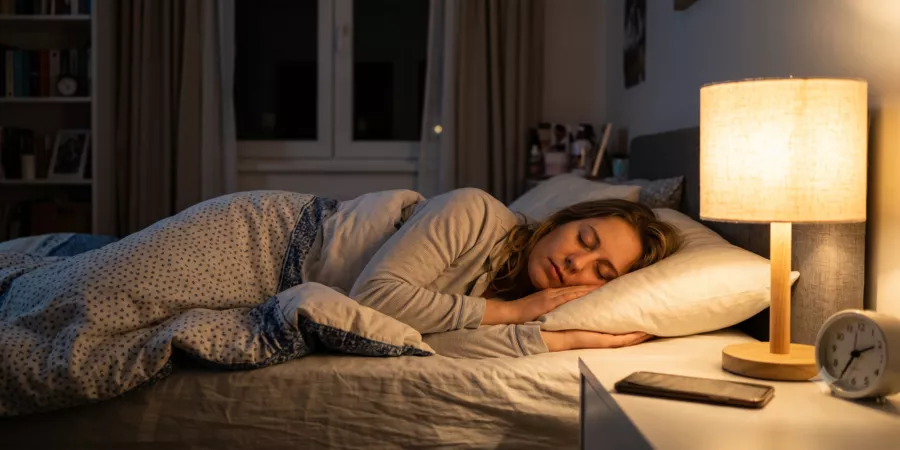
A new study has found that nighttime light exposure during sleep may be linked to changes in the structure and function of the heart, raising fresh concerns about a bedroom habit many people may overlook. Researchers found that people exposed to more than 3 lux of light during the night showed signs of cardiac remodeling, including a thicker heart muscle and reduced measures of heart function.
The study, published September 9 in the European Heart Journal, analyzed more than 11,000 UK Biobank participants and used wrist-worn light sensors to measure nighttime exposure. About three years later, researchers examined participants’ hearts using cardiovascular magnetic resonance imaging.
Can Sleeping with the Lights on Affect Your Heart?
Yes. The study found that higher nighttime light exposure was associated with measurable changes in heart structure and function, although the research does not prove that light directly causes heart disease.
The researchers focused on nighttime exposure above 3 lux, a relatively low level of illumination. For context, experts have described 3 lux as roughly comparable to moonlight or light entering a bedroom through a closed door.
The findings are significant because previous research has already connected light exposure at night, disrupted sleep and cardiovascular disease risk. The new research adds another dimension by examining physical changes in the heart itself.
What Did the New Sleep and Heart Study Find?
People exposed to higher levels of light at night had thicker heart muscle walls, greater left ventricular mass and early signs of reduced cardiac function.
The study included 11,071 UK Biobank participants, who wore a wrist device containing an integrated light sensor for seven days between 2013 and 2015. Researchers then used cardiac MRI data collected approximately three years later to examine changes in heart structure and function.
Compared with people who had virtually no nighttime light exposure above 3 lux, those in the highest exposure category had:
- 2.4% greater left ventricular mass
- 1.5% greater average heart-wall thickness
- 1.9% lower myocardial contraction fraction
- Around 3% lower measures of several types of left ventricular strain
Researchers also observed changes involving the right ventricle and left atrium.
These differences may appear small, but they matter because changes in the heart’s structure can represent early stages of cardiac remodeling, a process associated with cardiovascular problems.
What is Cardiac Remodeling and Why Does it Matter?
Cardiac remodeling refers to any changes, for example, in heart size, shape or structure, that may occur if the heart is chronically stressed or otherwise damaged.
It seems from this research that exposure to light at night mainly affects modifications in the left ventricle which is the part of the heart that actually sends oxygenated blood all through our bodies.
Researchers found that greater nighttime light exposure was associated with increased left ventricular mass and wall thickness. The study also identified reduced measures of myocardial contraction and deformation, suggesting that the heart may become less efficient as these structural changes develop. That does not mean that anyone who sleeps with a television or night-light will develop heart failure. The researchers identified an association, rather than establishing a direct cause-and-effect relationship.
Why Could Nighttime Light Affect Heart Health?
Nighttime light may affect cardiovascular health by disrupting sleep, suppressing melatonin and interfering with the body’s circadian rhythm.
The human body uses light and darkness to regulate its internal biological clock. Exposure to light during the biological night can interfere with melatonin production and alter normal circadian signaling.
The researchers found that shorter sleep duration partly explained the relationship between nighttime light and adverse heart changes. Their analysis estimated that reduced sleep duration accounted for roughly 24% to 49% of the observed associations, depending on the cardiac measurement being considered.
However, sleep duration did not explain the entire association. Researchers point to other possible pathways involving circadian disruption, increased sympathetic nervous system activity, blood pressure regulation, oxidative stress and vascular function.
How Much Light is Too Much When Sleeping?
The study used more than 3 lux as its nighttime light threshold, but it does not establish 3 lux as a definitive safety limit for every person.
The researchers divided participants according to their measured exposure above 3 lux and found a dose-response relationship: greater nighttime light exposure was associated with progressively more pronounced changes in several cardiac measurements.
This is important because common bedroom light sources can include smartphone screens, digital alarm clocks, televisions, hallway lighting, streetlights and outdoor light entering through windows.
The findings suggest that keeping the bedroom as dark as reasonably possible may be a practical sleep health and heart health measure.
What Can You Do to Reduce Nighttime Light Exposure?
Simple changes can make a bedroom darker and may also support better sleep.
People can consider:
- Turning off televisions and unnecessary lights before sleep
- Keeping smartphones face-down or outside the bedroom
- Using blackout curtains where outdoor light enters the room
- Covering bright lights on electronic devices
- Using a dim, warm-colored light when nighttime illumination is necessary
- Wearing a sleep mask if the bedroom cannot be darkened
In addition to regular physical activity, eating a balanced diet, maintaining optimal blood pressure, quitting smoking, and keeping a healthy weight, these measures will contribute greatly to your efforts to prevent heart disease, improve your sleeping, and lead a more generally healthy lifestyle.
Does this Study Prove That Light Causes Heart Disease?
No. The study shows a strong observational association, but it cannot establish that nighttime light exposure directly causes heart disease.
The researchers measured light exposure for only seven days, meaning the sensor data may not perfectly represent participants’ usual long-term sleeping environments. Wrist-based measurements also cannot completely capture how much light reaches a person’s eyes while sleeping.
Still, the research is notable because it combines objectively measured nighttime light exposure with detailed cardiac MRI measurements several years later. The authors also adjusted their analysis for numerous demographic, lifestyle, health and environmental factors.
The findings add to growing evidence that sleep quality, circadian health and nighttime light exposure are relevant to cardiovascular health. For people looking for a simple way to improve their sleep environment, reducing unnecessary light at night may be one practical place to start.