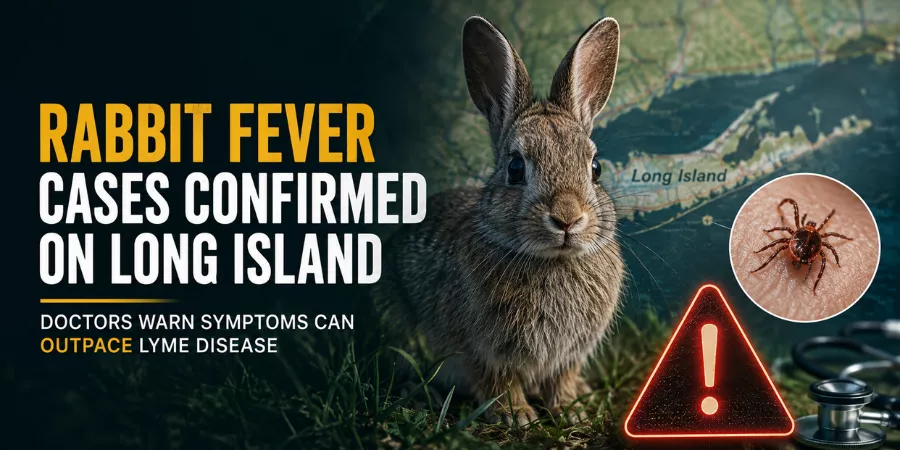
Suffolk County health officials confirmed three cases of tularemia, commonly called rabbit fever, in Long Island residents in 2026. The bacterial illness, transmitted primarily through tick bites, produces symptoms doctors describe as more severe than Lyme disease, including high fevers and joint pain intense enough to send patients to the emergency room. One of the confirmed cases involved a 9-year-old boy who developed an 11-day fever after a tick bite on his scalp.
Why this Matters Beyond Long Island
Rabbit fever is rare nationally, but it is not new, and its trajectory suggests it deserves more attention than it currently gets. The CDC recorded 2,462 tularemia cases across 47 states between 2011 and 2022, a 56% increase over the prior decade. Alison Hinckley, an epidemiologist with the CDC’s Division of Vector-Borne Diseases, has said cases are becoming more common in the U.S.
The disease has been reported in every state except Hawaii, with Arkansas, Missouri, Oklahoma, and Kansas together accounting for more than half of all cases nationwide, according to the American Veterinary Medical Association.
Suffolk County’s cluster fits a pattern public health officials have flagged elsewhere this year: tick-borne illnesses expanding into regions and populations that previously saw them rarely.
What Rabbit Fever Actually is
Rabbit fever is caused by the bacterium Francisella tularensis, first identified as a disease in squirrels in Tulare County, California, in 1911. Despite the name, rabbit fever in humans is not limited to rabbit contact. The CDC has documented the bacteria in more than 100 animal species, and only 10 to 50 organisms are enough to cause illness in a person.
How is Rabbit Fever Spread
Suffolk County officials said the disease reaches people when a tick bites a sick rabbit and then bites a human. That mechanism answers a common question directly: how is rabbit fever spread. The American dog tick is the primary tick vector in the U.S., though deer flies can also transmit the bacteria.
Beyond a rabbit fever tick bite, infection can occur through direct contact with infected animal tissue, inhaling aerosolized bacteria (including during lawn mowing over an infected carcass), drinking contaminated water, or eating undercooked game meat. Person-to-person transmission has not been documented.
So, how do you get rabbit fever in practice? For most people, exposure comes down to one of two paths: a rabbit fever tick bite during outdoor activity, or direct handling of a sick or dead wild animal, most often during hunting or yard work.
Rabbit Fever Symptoms in Humans
Dr. Sharon Nachman of Stony Brook Children’s Hospital described the presentation bluntly: patients arrive with headaches, muscle pain, joint pain, and a level of misery that typically lands them in urgent or emergency care rather than staying home. That severity is a defining feature of rabbit fever symptoms in humans compared with other tick-borne diseases, which often start milder.
Symptoms generally begin three to five days after exposure, though onset can take up to two weeks. The specific presentation depends on how the bacteria entered the body, a tick bite often causes a skin ulcer at the bite site along with swollen lymph nodes, while inhaled exposure can cause respiratory symptoms.
In the Suffolk County case involving the 9-year-old, the wound on his scalp was not immediately connected to his illness, delaying diagnosis until an infectious disease specialist, who told the family he had seen only one prior case in his career, made the call.
Rabbit Fever in Dogs and Other Animals
Tularemia is not confined to wildlife. Rabbit fever in dogs is documented, along with infections in cats, sheep, pigs, and horses; cattle appear largely resistant. Dogs typically become infected the same way people do, through tick bites or contact with infected animals, and in some cases can pass the bacteria to their owners through saliva after contact with a sick rabbit.
Wild reservoirs extend well past rabbits, too. Rabbit fever in squirrel populations is well established in veterinary and public health literature, alongside hares, muskrats, beavers, and prairie dogs. Infected wild animals sometimes show no outward signs of illness, though some appear lethargic or uncoordinated, making visual identification unreliable.
Treatment for Rabbit Fever
The Suffolk County family’s experience illustrates the standard course: multiple rounds of antibiotics resolved the boy’s fever and scalp pain after 11 days. Health officials in the county emphasized that tularemia is treatable, and the CDC confirms that most infections respond well to antibiotic therapy when caught.
Delayed treatment for rabbit fever raises the risk of complications, which is why officials are urging anyone with a tick bite that develops into an open sore to contact a doctor rather than wait it out.
What Officials are Telling Residents to Do
Detmer, the mother of the boy diagnosed earlier this year, said her family’s takeaway was less about avoiding wildlife and more about vigilance. Wild rabbits generally flee from humans on their own, so the practical prevention step is tick checks after outdoor activity, not tracking down animals to avoid. Nachman separately advised against approaching dead or dying wild rabbits, since carcasses can remain infectious.
What Comes Next
Suffolk County has not indicated whether additional cases are under investigation, and state health officials have not yet issued a broader tri-state advisory beyond the general tick-season warnings already in place for the Northeast. With CDC data showing a rising national case count over the past decade, the open question is whether 2026 becomes an isolated Long Island cluster or the start of a wider regional pattern that pushes rabbit fever further into routine tick-season warnings alongside Lyme disease.
FAQs
What is rabbit fever?
Rabbit fever, or tularemia, is a bacterial illness caused by Francisella tularensis, spread mainly through tick and deer fly bites or contact with infected animals.
How do you get rabbit fever?
Most commonly through a tick bite, or by direct contact with an infected wild animal, especially rabbits, hares, or rodents.
Is rabbit fever treatable?
Yes. Antibiotics are the standard treatment for rabbit fever, and most cases resolve successfully when treated promptly.
Can dogs get rabbit fever?
Yes. Rabbit fever in dogs occurs through tick bites or contact with infected animals, and dogs can potentially transmit the bacteria to humans.