Most people treat their liver like a self-cleaning oven, assume it handles everything, never think about it, only worry when something breaks.
The problem is that something is breaking. A lot.
Fatty liver disease currently affects nearly 40% of the global population, according to the Global Liver Institute. That number was 25% just a few decades ago. The liver has not changed. The diet has.
You know what the good news: the same way food damages the liver over time, food can also protect it. Not through cleanses, not through detox teas, those do nothing useful. The liver already detoxifies itself. What it needs is less to fight against, and more of what actually helps it function.
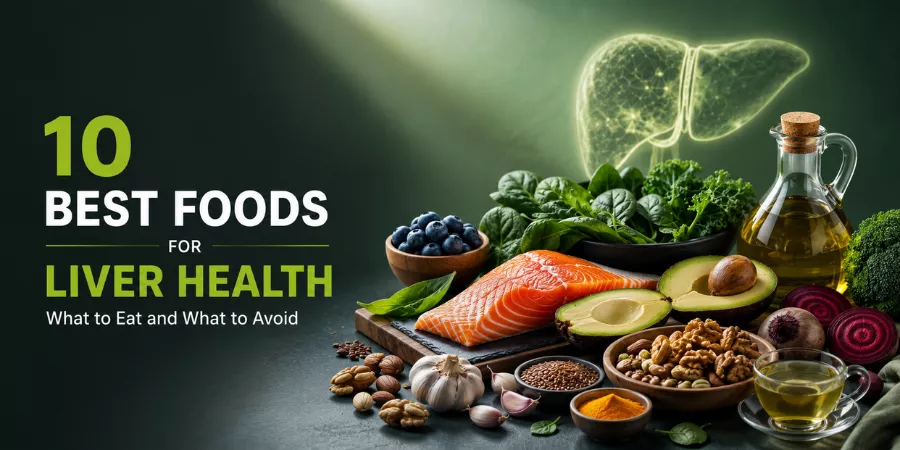
These are the 10 best foods for liver health, backed by real research.
What Does the Liver Do All Day?
Before getting into food, it helps to understand why the liver matters so much.
It is not one organ doing one job. It is one organ doing over 500 jobs simultaneously, filtering blood, producing bile for digestion, storing vitamins, regulating blood sugar, processing fats, and clearing waste products from the body.
| Liver Function | What It Means in Practice |
| Filters blood | Clears toxins, medication residue, and waste |
| Produces bile | Breaks down dietary fat in the small intestine |
| Stores vitamins | Holds A, D, E, K, and B12 in reserve |
| Regulates blood sugar | Releases glucose when the body needs energy |
| Processes fats | Manages cholesterol and lipid levels |
| Removes old cells | Breaks down worn-out red blood cells |
When the liver is under constant pressure from poor diet, excess alcohol, or too much sugar, it accumulates fat. That is how fatty liver disease starts. Without symptoms, often for years before anyone notices.
Can Food Actually Fix a Struggling Liver?
Honestly, it depends on how far things have gone.
In early-stage fatty liver, dietary change alongside regular exercise can reduce liver fat significantly, sometimes back to normal levels. The liver is one of the few organs that can genuinely regenerate when given the right conditions.
What food cannot do is override advanced liver damage or act as a magic detox. No juice cleanse flushes the liver. No supplement replaces consistent, long-term dietary habits. The liver naturally detoxifies itself, what a good diet does is reduce how much it has to deal with in the first place.
Below are the 10 Best Foods for Liver Health
1. Coffee
Nobody expects this to be at the top of a liver health list. But the research on coffee and liver health is some of the most consistent in nutritional science.
A 2026 Cedars-Sinai study tracked 354,957 people for 13 years and found that drinking one to two cups daily was linked to a 20% lower risk of cirrhosis and a 31% lower risk of liver-related death. People who drank five or more cups showed even sharper reductions, including a 47% lower risk of liver cancer.
Decaf showed similar results, meaning caffeine alone is not driving the benefit. The antioxidants and anti-inflammatory compounds in coffee appear to reduce liver fat, liver iron, and fibroinflammation measurably on MRI scans.
Three to four cups a day appears to be the sweet spot. People with acid reflux, anxiety disorders, or heart conditions should check with their doctor before increasing intake.
2. Fatty Fish
Salmon, sardines, and mackerel are rich in omega-3 fatty acids, the healthy fats that reduce liver inflammation and help prevent fat from building up in liver cells.
A 2023 review in Nutrients found that omega-3 supplementation significantly reduced liver fat in people with metabolic dysfunction-associated steatotic liver disease, the clinical name for what most people call fatty liver.
Two servings of fatty fish per week is a reasonable target. Grilled or baked works. Deep-fried does the opposite.
3. Garlic
Garlic is not glamorous but it earns its place here.
It contains sulfur compounds that activate liver enzymes responsible for clearing waste from the blood. A study in Advanced Biomedical Research found that garlic powder supplementation reduced body weight and liver fat content in people with non-alcoholic fatty liver disease, without significant side effects.
Raw garlic has the highest concentration of active compounds. Cooking reduces potency but does not eliminate the benefit entirely. Adding it to dressings, sauces, or eating it with vegetables is a practical way to incorporate it daily.
4. Oats
Oats are one of the best whole grains for liver-friendly diets because of beta-glucan, a soluble fibre that slows glucose absorption, feeds beneficial gut bacteria, and supports weight management.
This matters because insulin resistance is one of the primary drivers of fatty liver disease. When blood sugar spikes repeatedly throughout the day, the liver converts excess glucose into fat. Oats help keep that process in check.
Plain rolled or steel-cut oats are the best options. Flavoured instant varieties often contain enough added sugar to cancel out the benefit.
5. Leafy Greens
Spinach, kale, and rocket contain antioxidants, folate, and plant nitrates that appear to reduce fat accumulation in liver cells and support healthy liver enzyme activity.
A study published in Gut found that spinach intake was associated with reduced liver fat content in adults. Beyond that specific finding, leafy greens are low in calories, high in fibre, and consistently appear across every dietary pattern associated with better metabolic health.
They are also one of the cheapest items in the supermarket. That is worth mentioning.
6. Berries
Blueberries, strawberries, and cranberries are loaded with polyphenols, plant compounds that protect liver cells from oxidative damage and reduce inflammation.
Animal studies have shown blueberry extract can increase antioxidant enzyme activity in the liver by up to 43% and slow the progression of liver fibrosis. Human studies are more limited but the antioxidant case for berries across metabolic health is well established.
Fresh and frozen berries carry similar nutritional value. No need to buy anything expensive or powdered.
7. Nuts
Walnuts are very helpful for liver health. The reason is that they are rich in omega-3 fatty acids, vitamin E and antioxidants to improve liver cell health and reduce inflammation.
In addition, almonds provide vitamin E and heart healthy monounsaturated fats
A study in JHEP Reports (2021) found that regular nut consumption was associated with a meaningfully lower risk of non-alcoholic fatty liver disease. A small daily handful replaces processed snacks rather than adding to overall calorie intake, that distinction matters for liver fat reduction.
8. Olive Oil
Extra virgin olive oil is one of the most practical foods for liver health that most people already have in their kitchen.
It contains oleocanthal, a compound with anti-inflammatory properties comparable in mechanism to ibuprofen at low doses. A study in Nutrition & Metabolism found that olive oil consumption was linked to reduced liver fat and improved insulin sensitivity in patients with fatty liver disease.
Using it as a cooking base or salad dressing, rather than butter or seed oils, is a simple swap with real evidence behind it.
9. Green Tea
Green tea contains catechins, a group of antioxidants that have shown associations with lower liver enzyme levels and reduced liver fat in several studies.
One important clarification: brewed green tea and high-dose green tea extract supplements are not the same thing. Brewed tea is safe for daily use. Concentrated green tea supplements have been linked to liver toxicity in documented cases, the opposite of the intended effect. 2 to 3 cups of brewed green tea daily is a sensible, safe amount.
10. Cruciferous Vegetables
Broccoli, cauliflower, and Brussels sprouts contain glucosinolates, compounds that activate detoxification enzymes in the liver and support normal liver function.
Animal studies have shown that broccoli consumption may help prevent fat build-up in liver cells over time. Human data is still catching up, but the fibre content and low-calorie density of cruciferous vegetables make them consistently useful in any healthy liver diet regardless of the mechanism specifics.
What Foods to Avoid to have a Good Liver Health?
These are the foods that, if eaten regularly over time, create the conditions for liver disease.
| Food or Drink | How It Damages the Liver |
| Alcohol | Directly toxic to liver cells; leading cause of cirrhosis globally |
| Sugary drinks | Fructose drives fat storage directly in liver tissue |
| Processed meat | High saturated fat and sodium; promotes chronic inflammation |
| Fried foods | Trans and saturated fats raise liver fat levels consistently |
| Refined carbohydrates | White bread and pastries spike blood sugar and insulin repeatedly |
| Packaged snacks | Concentrated sugar, salt, and industrial oils with zero nutritional value |
Alcohol deserves a specific mention. It is not that a single drink destroys liver function. It is that chronic alcohol consumption is the leading cause of cirrhosis worldwide, and the damage is cumulative and largely irreversible at advanced stages.
A Simple One-Day Liver-Friendly Meal Plan
This is a practical example of what a foods-for-liver-health day looks like when these ingredients come together.
| Meal | What to Eat |
| Breakfast | Rolled oats with blueberries, a handful of walnuts, no added sugar |
| Lunch | Grilled salmon on a bed of spinach with olive oil and lemon dressing |
| Snack | A small handful of almonds and a cup of brewed green tea |
| Dinner | Roasted broccoli and cauliflower with garlic, served alongside brown rice |
Nothing on that list is expensive or hard to prepare. That is the point.
What Lifestyle Habits Support the Foundation of this Diet?
Food is the foundation. These factors reinforce it.
- Exercise regularly – physical activity reduces liver fat independently of weight loss, even in moderate amounts.
- Stay hydrated – water supports the liver’s natural filtration and bile production.
- Maintain a healthy weight – visceral fat around the abdomen is directly linked to fatty liver progression.
- Prioritise sleep – poor sleep quality is associated with worsened insulin resistance and liver inflammation.
- Avoid smoking – tobacco accelerates liver damage in people with any existing liver condition.
- Get liver function checked – fatty liver disease is almost always asymptomatic until it is advanced.
FAQs
Which fruit is the best for liver health?
Blueberries have the strongest research behind them specifically for liver protection. Berries broadly, strawberries, cranberries, and raspberries, are all good choices due to their high polyphenol content.
Is coffee actually good for the liver?
Yes, and significantly so. A study of over 350,000 people tracked for 13 years found consistent links between regular coffee consumption and lower rates of cirrhosis, liver cancer, and liver-related death, including with decaf.
Can changing your diet reverse fatty liver disease?
In early stages, yes. Combined with regular exercise and weight management, dietary changes can reduce liver fat measurably within 8 to 12 weeks. Advanced fibrosis or cirrhosis requires medical management, diet alone is not enough at that stage.
Are eggs good for the liver?
Eggs are nutritious and not harmful to the liver for most people. They provide choline, a nutrient that supports fat metabolism in liver cells. People with advanced liver disease should follow specific medical dietary guidance.
Is turmeric good for liver health?
The active compound in turmeric, curcumin, has anti-inflammatory properties shown in lab and animal studies. Human evidence is limited. Turmeric as a food spice is safe and worth including. High-dose curcumin supplements are a different matter and need more evidence before making strong claims.
How long does it take to see improvement?
Most intervention studies show measurable reductions in liver fat within 8 to 12 weeks of consistent dietary change and exercise. Individual results depend heavily on starting severity and adherence.
Conclusion
The liver is genuinely remarkable. It filters everything. It stores what the body needs. It regenerates. It handles more metabolic work than any other organ, largely without any notice from the person it is keeping alive.
What it needs in return is not complicated. Less alcohol, less sugar, less processed food. More coffee, more fish, more vegetables, more olive oil. Not perfection. Just a consistently better pattern of eating over time.
With fatty liver disease affecting nearly 40% of the global population, the most impactful change available to most people is not a new drug or a detox protocol. It is what goes on the plate, repeatedly, over months and years.