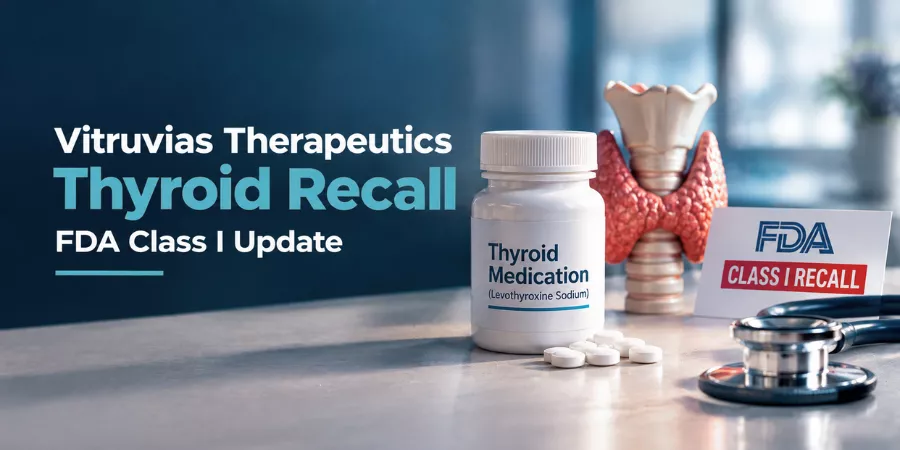
The Vitruvias Therapeutics Thyroid recall has been upgraded to a Class I recall by the U.S. Food and Drug Administration (FDA), its most serious recall classification. The action involves one lot of Thyroid Tablets, USP 30 mg that testing found could be superpotent, meaning stronger than intended.
Vitruvias Therapeutics announced the voluntary recall on August 21, 2026. The FDA published the company’s recall notice on August 24 and classified it as Class I on September 22. The affected tablets were distributed nationwide in the United States, making the lot number the most important detail for patients checking whether their medicine is involved.
Which Vitruvias Therapeutics Thyroid Tablets are Recalled?
The recall covers only one identified lot, rather than all products made by Vitruvias Therapeutics.
| Product detail | Recalled product |
| Product | Thyroid Tablets, USP 30 mg |
| NDC | 69680-166-00 |
| Lot | 504950 |
| Expiration | September 30, 2026 |
| Units released | 3,655 |
| Units sold | 1,955 |
| Distribution | U.S. nationwide |
| Distribution dates | January 31–September 30, 2025 |
The product was supplied to Vitruvias Therapeutics’ direct accounts across the United States. Patients should check the lot number, rather than assuming every thyroid product from the company is affected.
Why Was the Thyroid Drug Recalled?
The recall followed testing that confirmed the potential for the tablets to be superpotent. In simple terms, the tablets could deliver more thyroid hormone than intended.
Thyroid Tablets, USP is used to treat hypothyroidism, or an underactive thyroid. The preparation contains thyroid hormones including levothyroxine (T4) and liothyronine (T3). Too much thyroid hormone can have the opposite effect of untreated hypothyroidism, pushing the body toward hyperthyroidism.
The FDA lists possible effects of exposure to superpotent tablets as:
- Weight loss
- Heat intolerance
- Fatigue
- Nervousness
- Muscle weakness
- High blood pressure
- Chest pain
- Rapid heartbeat
- Heart rhythm disturbances
The concern is therefore about excess hormone exposure, not contamination or a problem with every thyroid product on the market.
What Does the FDA’s Class I Recall Mean?
A Class I designation means the FDA considers there to be a reasonable probability that using or being exposed to the recalled product could cause serious adverse health consequences or death. It is the highest of the FDA’s three recall classifications.
The classification describes the potential risk associated with the recalled product. It does not mean that every person who took the tablets will become seriously ill.
That difference is important because the original recall was based on the product’s potential superpotency. The FDA’s later Class I classification increases the regulatory seriousness of the recall; it does not change the fact that Lot 504950 is the specific lot identified in the recall.
Who May Face Greater Risk?
The FDA identifies older adults, pregnant women and infants as groups at greater risk from superpotent thyroid tablets, particularly with prolonged exposure. Excess thyroid hormone can affect the cardiovascular system in older adults. During pregnancy, overtreatment with thyroid hormone has been associated with complications including premature delivery and low birth weight.
For everyone else, the potential symptoms remain relevant. Someone taking a recalled product does not need to assume that symptoms will occur, but new or concerning symptoms should be discussed with a healthcare professional.
What Should Patients Do If They Have Lot 504950?
Patients who find Lot 504950 on their bottle should contact their healthcare provider or pharmacist for instructions.
The company specifically advises patients not to stop taking the recalled product without first contacting their healthcare provider for further guidance or a replacement prescription. Abruptly changing thyroid treatment can create its own medical problems, so the appropriate next step depends on the individual’s treatment and health history.
A patient checking a bottle should confirm these three details:
- Thyroid Tablets, USP 30 mg
- NDC 69680-166-00
- Lot 504950
If all three match, contact the prescribing clinician or pharmacist before making a change.
Anyone who believes they have experienced a problem related to the recalled product can also report an adverse reaction or quality issue through the FDA’s MedWatch program.
Does this Recall Affect Other Thyroid Medicines?
No. The Vitruvias Therapeutics Thyroid recall concerns the specific 30 mg product and Lot 504950 identified by the FDA.
It should not be interpreted as a recall of all thyroid medication, all thyroid tablets, or all medicines used to treat hypothyroidism. Patients taking another product should check its manufacturer, product name and lot information rather than assuming it is included.
What Happens Next?
Vitruvias Therapeutics said it was notifying wholesalers to stop distribution and arranging for the recalled tablets to be destroyed. The company also provided a consumer contact number and email for recall questions.
As of the FDA’s August 24 recall notice, the company had not reported known adverse events associated with the recalled lot. That information reflects the status when the original notice was issued and does not eliminate the potential risk identified through testing.
For consumers, the immediate issue is much simpler: check the bottle before changing treatment.
The latest FDA action does not expand the recall to every Vitruvias product. It raises the classification of the existing recall involving Lot 504950 of Thyroid Tablets, USP 30 mg to Class I because of the potential consequences of exposure to a superpotent product. Patients with that lot should contact a healthcare professional for guidance rather than stopping treatment on their own.
Latest update: September 25, 2026. The FDA’s Class I classification was issued September 22, following Vitruvias Therapeutics’ August 21 voluntary recall.