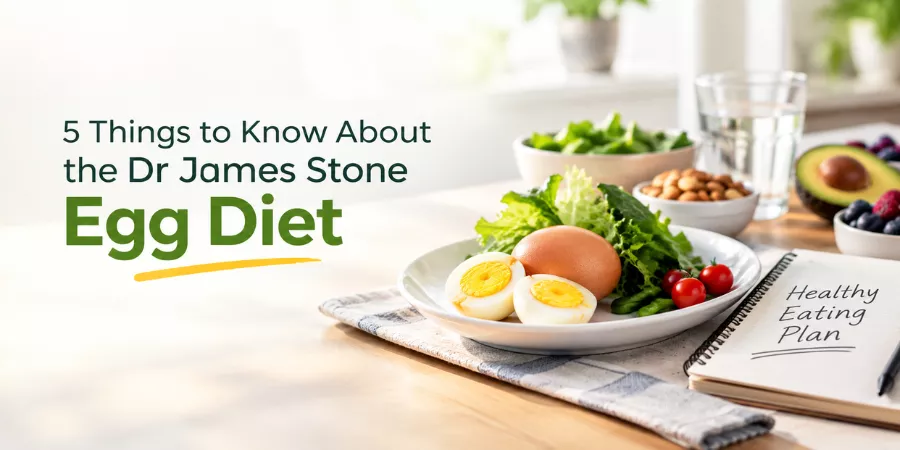
Dr. James Stone says he usually eats four or five eggs with vegetables and avocado. His meals also avoid foods such as white bread, white rice, white flour and added sugar.
Below are five things to know about the Dr. James Stone egg diet, including what it involves, its possible benefits and what nutrition research says about eating eggs.
1. Dr. James Stone Eats Eggs with Vegetables and Avocado
Stone’s typical meal combines four or five eggs with vegetables such as tomatoes, onions and jalapeños, along with avocado.
Eggs provide protein, vitamin B12, selenium and choline. One large egg has about 6 grams of protein and roughly 70 calories.
Vegetables add fiber and other vitamins and minerals, while avocado provides mostly unsaturated fat.
2. The Diet Limits Refined Foods and Added Sugar
Stone also recommends avoiding what he calls “white” foods, including:
- White bread
- White rice
- White flour
- White pasta
- Added sugar
- Excess salt
His approach therefore includes more than eggs. It also emphasizes vegetables and limits several highly refined foods.
The American Heart Association’s 2026 dietary guidance similarly recommends eating more vegetables, fruits, whole grains and healthy sources of protein while limiting added sugars, saturated fats, sodium and highly processed foods.
3. Eggs Can Be Part of a Weight-Loss Diet
Eggs can be useful in a weight-loss diet because they provide protein without many calories.
A large egg has about 70 calories and 6 grams of protein. Protein can help you feel full after eating.
But eating eggs alone does not cause weight loss. Your overall food intake still determines how many calories you consume.
An egg breakfast with vegetables is also very different from an egg breakfast loaded with butter, cheese, bacon or sausage.
4. Eggs and Cholesterol Are More Complicated Than They Used to Be
Eggs contain cholesterol, but dietary cholesterol is not the only factor that affects blood cholesterol.
One large egg contains around 200 milligrams of dietary cholesterol. Research and current heart-health guidance place greater emphasis on the overall diet, especially saturated fat and the quality of the foods eaten with eggs.
Harvard Health says that, for most people, eating one egg a day does not increase the risk of heart attack, stroke or other cardiovascular disease.
The American Heart Association also says eggs can be part of a heart-healthy eating pattern for healthy adults.
People with high cholesterol or other cardiovascular risk factors should ask their doctor how many eggs are appropriate for them.
5. The Dr. James Stone Egg Diet Is Not a Proven Weight-Loss Program
There is no clinical trial showing that the specific Dr. James Stone egg diet causes a certain amount of weight loss or improves heart health by a particular percentage.
Stone’s routine can be viewed as one way to build a high-protein meal: eggs provide protein, vegetables provide fiber and nutrients, and avocado provides unsaturated fat.
A healthy diet still needs variety. The American Heart Association recommends vegetables, fruits, whole grains, beans, nuts, seeds, healthy proteins and unsaturated fats as part of an overall eating pattern.
Key Takeaways
- Stone’s routine is a personal eating pattern, not a prescribed diet plan. There is no clinical protocol that tells people to copy his four- or five-egg meals.
- How the eggs are prepared can change the meal substantially. Eggs cooked with vegetables and served with avocado have a different nutritional profile from eggs paired with bacon, sausage, butter or other foods high in saturated fat.
- The rest of the day still counts. An egg-based breakfast does not compensate for a diet that is low in fiber, vegetables, fruit or whole grains.
- People respond differently to dietary cholesterol. Someone with high LDL cholesterol, diabetes or existing heart disease may need different guidance from a healthy adult.
- The useful idea is the meal structure, not the egg count. Protein, vegetables, healthy fats and fewer highly processed foods are consistent with the broader principles in the American Heart Association’s 2026 dietary guidance.